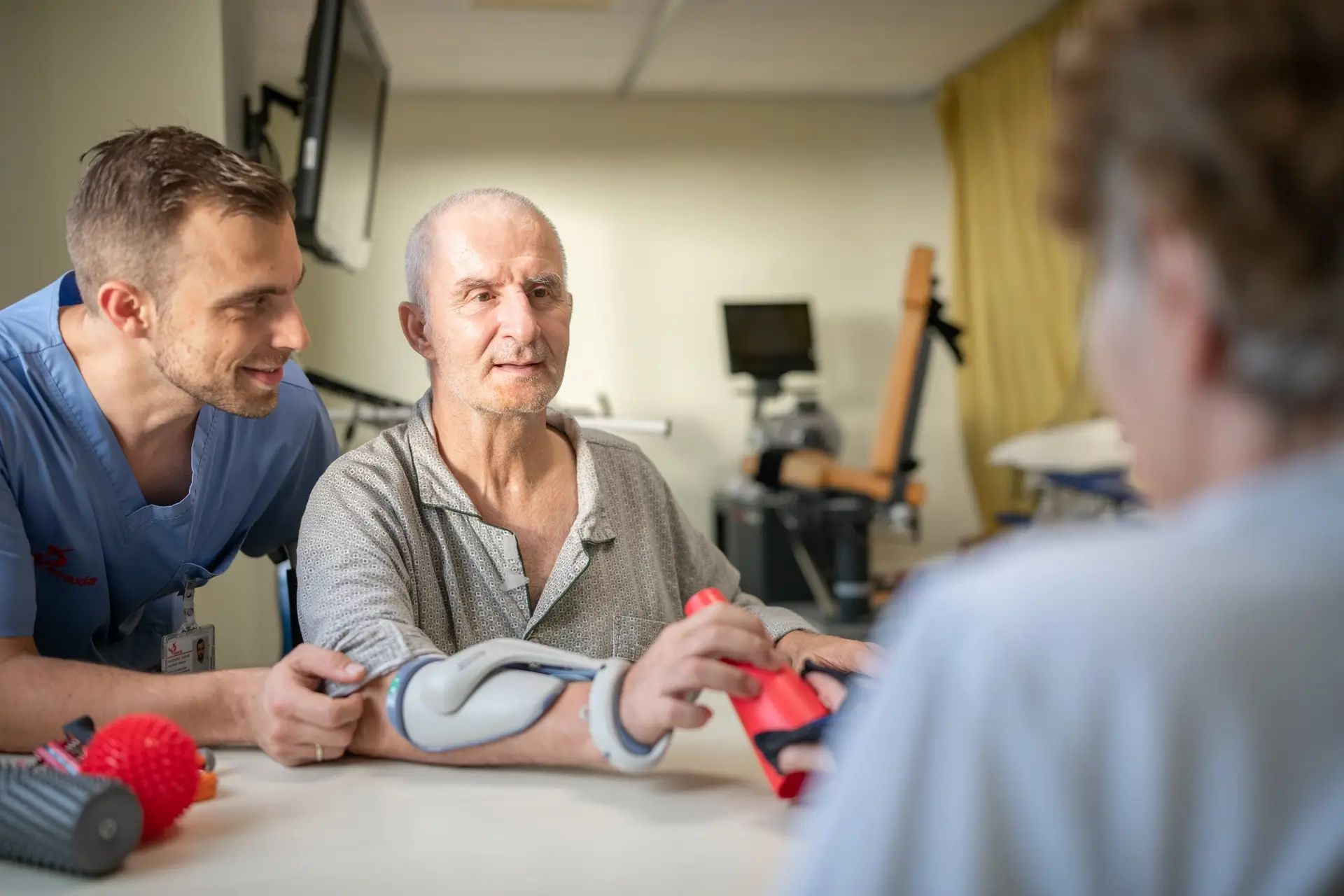
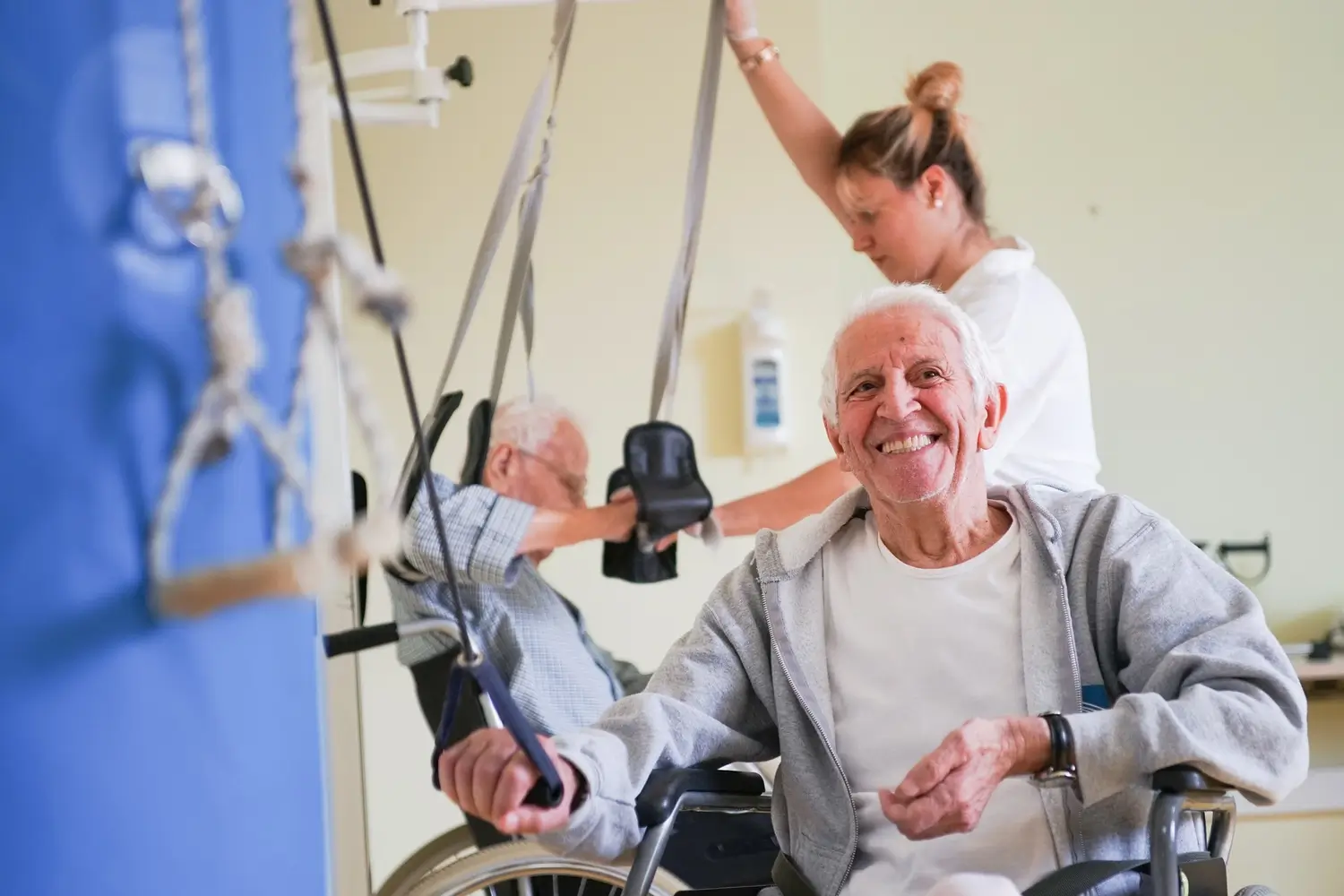
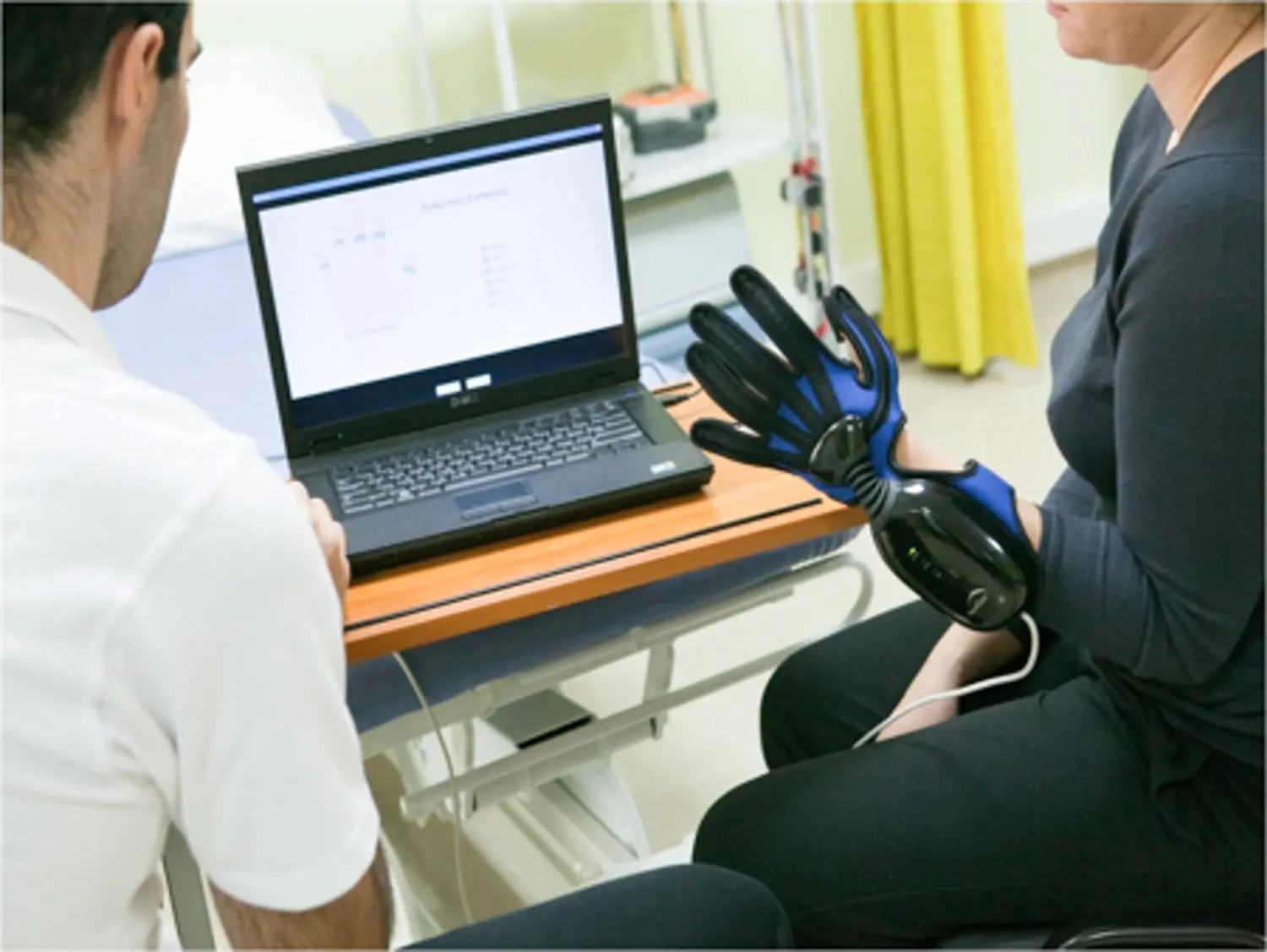
FND Rehabilitation For Irish Patients.
Inpatient rehabilitation for functional neurological disorder, at a 287-bed Rehabilitation Hospital in Greece. One clear explanation, movement retraining and at least 3 hours of therapy a day. Reimbursed by the HSE.
No referral or paperwork needed for the first call.

FND rehabilitation at Evexia Plus
Evexia Plus is a specialist Rehabilitation Hospital near Thessaloniki, Greece, where people from Ireland come for inpatient FND rehabilitation. It is for people with a confirmed diagnosis of functional neurological disorder (FND), including functional weakness and functional movement disorder. A physician in Physical Medicine and Rehabilitation leads your programme. Physiotherapists trained in FND movement retraining, occupational therapists and psychologists work with you every day, with at least 3 hours of therapy a day, and all of them give you one shared explanation of your symptoms. There is no waiting list: admission can be arranged as soon as your medical records are reviewed. Under the EU Cross-Border Healthcare Directive, the cost is reimbursable by the HSE.
- Led by
- A physician in Physical Medicine and Rehabilitation
- Therapy
- At least 3 hours a day, goals reviewed weekly
- Where
- Near Thessaloniki, Greece, about four hours' direct flight from Dublin
- Funding
- Reimbursable by the HSE under the EU Cross-Border Directive
- Start
- No waiting list, once your records are reviewed

What FND is, and how rehabilitation helps
The symptoms are real and not under your control.
Functional neurological disorder (FND) is a genuine and common condition, and one of the most common reasons people see a neurologist. In FND the nervous system is not damaged, but the way it works has gone wrong: the brain's automatic control of movement and sensation is misfiring. Doctors often call it a software problem, not a hardware one.
FND can cause weakness, tremor, spasms, difficulty walking, seizures, numbness, dizziness, and problems with speech or memory. FND is not imagined, not put on, and not "all in the head". It often starts after an injury, an infection or a faint. Stress plays a part for some people, but for many it does not.
FND is diagnosed by positive signs, not simply by normal tests. Those signs show that the pathways still work, which is why FND can improve. Functional neurological disorder treatment starts with a clear explanation, and rehabilitation builds on it.
How our FND treatment works
FND rehabilitation is different from conventional neurological rehabilitation. It retrains automatic movement, moves attention away from the body, uses fewer aids, and keeps one explanation across the whole team.
Understanding comes first
Your physician goes over your diagnosis in plain words, shows you the signs on your own body, and gives you the explanation in writing.
Retraining automatic movement
Physiotherapists trained in FND movement retraining build from what already works, step by step, back towards normal movement.
Attention away from the body
You practise movement with rhythm, conversation, carrying something or a new goal, so the automatic system does the work.
Fewer aids, guided not held
Therapists guide you rather than hold you. If you use aids now, we agree a gradual plan with you to reduce them, and never remove one you need for safety.
One FND specialist team, one explanation
Your physician, therapists, psychologist and nurses work as one FND specialist team: they all use the same explanation and the same words, and review your progress together every week.
Daily life, mood and sleep
Occupational therapy in everyday tasks, and a psychology assessment when you arrive, with support through your stay.
A plan for setbacks
From the start you learn techniques you can use on your own. You leave with a written home programme and a relapse plan.
Your FND rehabilitation programme
Functional neurological disorder rehabilitation at Evexia Plus is planned around your goals by a Physical Medicine and Rehabilitation physician, who leads the team and reviews your progress with you every week. It always follows the same order:
- 1UnderstandingWhat FND is, and why the techniques work.
- 2RetrainingMovement and daily tasks, practised many times a day.
- 3Self-managementUsing your techniques on your own.
- 4A written relapse planWhat to do on a bad day, and when to ask for help.
Most people work with several of these services each day:

Physiotherapy
FND movement retraining for standing, walking, balance, tremor and hand use.
See the service
Occupational therapy
Everyday tasks such as cooking and dressing, fatigue planning and plans for home.
See the service
Psychology and neuropsychology
Mood, sleep, functional seizures and family support.
See the service
Speech and swallowing
Assessment and therapy for functional speech, voice or swallowing symptoms.
See the serviceA typical day
Fatigue and pain are common with FND, so the day is planned around your energy, with rest built in.
Morning
Physiotherapy for standing and walking, then occupational therapy in a real task, such as making a meal.
Midday
Lunch served at your bedside, and time to rest.
Afternoon
More physiotherapy, then psychology or speech and language therapy, depending on your plan.
Evening
Time with your family, and some practice of your own techniques.
What to expect during your stay
In the first days, the team goes over your diagnosis with you and agrees goals in your own words, with your family if you wish. Realistic goals might be:
Most people with FND improve meaningfully with the right rehabilitation. Complete recovery is possible but is not the usual result, and symptoms can come and go. The large trials of FND treatment had mixed results: no clear difference on their main measure, but people who had the treatment more often said they felt and coped better. So we cannot promise a cure or a timeline. We review your goals every week and tell you honestly what we see. Before you leave, we send a full report to your doctor in Ireland, using the same explanation you heard here.
From the first call to coming home
Most people have never arranged care abroad. This is the whole route, so you know what happens next and who does it.
Before you travel
- 1
Talk to us
Call, send a WhatsApp message or use the form. We explain how the Cross-Border Directive works and what we need from you.
- 2
Send your records
Your neurologist's letter confirming the diagnosis, a recent medical summary, your medication list and any recent scans. Our physician reviews them and tells you honestly whether a stay is likely to help.
- 3
Referral and estimate
Ask your GP or public hospital consultant for a dated referral letter; we tell you exactly what it should say. We send a written estimate in English before you commit.
Your stay
- 4
Choose your date
There is no waiting list. You choose the date, and we meet you at Thessaloniki airport.
- 5
Consultation and admission
The outpatient consultation with our physician the day before admission, then your programme starts.
- 6
Your stay
At least 3 hours of therapy a day, from understanding to retraining to managing on your own, with your goals reviewed every week.
Back home
- 7
Home and your claim
You go home with a written home programme, a relapse plan and every document the HSE claim needs.
How the HSE reimburses FND rehabilitation
FND rehabilitation at Evexia Plus is reimbursable by the HSE under the EU Cross-Border Healthcare Directive. You don't need a medical card or private insurance.
You pay the hospital
You pay Evexia Plus directly for your stay.
You claim from the HSE
With the documents we give you at discharge.
The HSE repays you
What you paid, up to what the same care would cost in the Irish public system.
What the HSE needs
- 01
A referral letter from your GP, or from a hospital consultant who sees you as a public patient.
- 02Our recommendation
An outpatient consultation, in person, dated after the referral. Have it with our physician in Greece the day before admission: one trip, and no wait for a clinic appointment in Ireland.
- 03Optional
Prior Notification gives an indicative figure, not a guarantee, and with current delays the HSE's reply can take months. We usually advise going ahead without it, because the HSE assesses every claim after treatment either way.
Reimbursable
- The inpatient programme (therapy, nursing care and your stay in the hospital)
- Medicines and tests during the stay
- The outpatient consultation at the HSE's rate
Not reimbursable
- Flights and other travel
- Family travel and accommodation outside the hospital
- Medicines you take home
Before you commit, our team sends a written estimate in English. At discharge, we give you every document the claim needs.


Your family can stay with you
Rehabilitation goes better with the people you love close by. One family member can stay with you free of charge, in your room or in nearby accommodation we arrange.
More relatives can stay in seaside hotels in Kallikratia, five minutes away, and a free shuttle bus runs to Thessaloniki. Airport transfers are free for you and your family.
Our team explains FND to your family in the same words we use with you, so they can help without doing things for you. If you have functional seizures, they learn what to do during an episode.
Every member of our staff communicates in English, and psychology and speech and language therapy are delivered in fluent English.
See Evexia Plus before you travel.
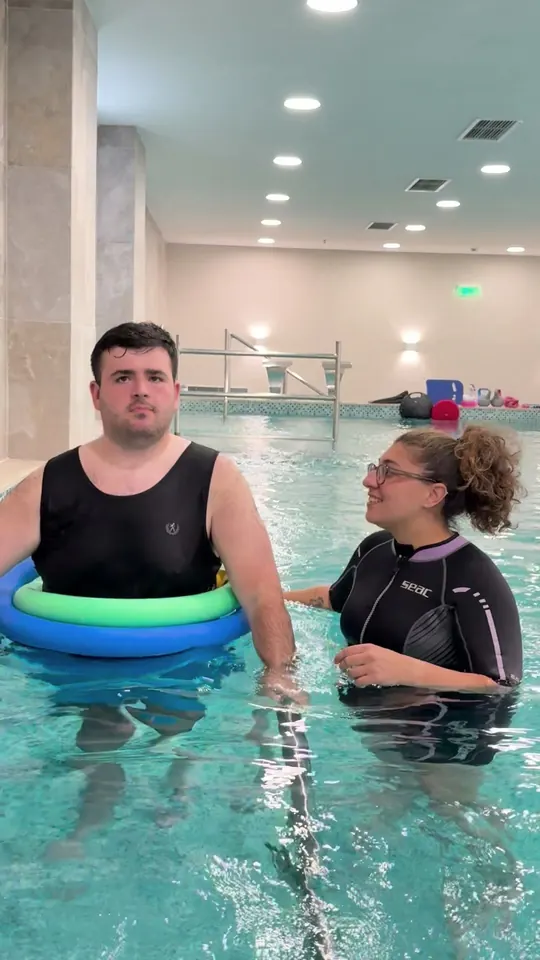
Photos and reels from the therapy halls and the pools. Follow us for a closer look.
@evexia.ie on Facebook (opens in a new tab)@evexia.plus on Instagram (opens in a new tab)@evexia.ie on TikTok (opens in a new tab)

Questions about FND rehabilitation
What is functional neurological disorder (FND)?
FND is a common condition in which the nervous system is not damaged but is not working properly. The brain's automatic control of movement and sensation goes wrong, causing weakness, tremor, walking problems, seizures or numbness. The symptoms are genuine and not under your control. FND is not "all in the head", and because the problem is in how the system works, it can often improve with rehabilitation.
How is FND diagnosed?
A neurologist diagnoses FND from positive signs in the examination, not just from normal tests. For example, a leg that is weak when you push down with it may push down normally when you lift your other leg. These signs show that the pathways still work. Once the diagnosis is clear, we don't repeat the same tests without a specific reason.
Can FND be treated, and will I get better?
Yes, FND is treatable. With a clear explanation and FND-specific rehabilitation, most people improve meaningfully in what they can do and how they feel. Complete recovery is possible but is not the usual result, and symptoms can come and go. The large trials had mixed results, so we will not promise a cure. We will tell you honestly what is realistic for you.
How is FND physiotherapy different from ordinary physiotherapy?
For functional weakness and functional movement disorder, FND physiotherapy retrains movement the brain normally does automatically, rather than strengthening muscles. Your therapists build from what already works, practise movement while your attention is on a rhythm or a task, and guide you rather than hold you. Aids are reduced gradually, where it is safe, because heavy support can keep symptoms in place.
How long does recovery from FND take?
It is different for everyone, and there is no fixed timeline. People who start rehabilitation soon after diagnosis tend to do better, which is one reason a waiting list matters. The length of your stay is set by the consultant at your outpatient consultation and reviewed every week with you. The HSE does not limit the number of weeks it reimburses; it caps the rate.
What if functional seizures are my main symptom?
Talk to us first. For functional seizures, also called dissociative seizures, psychological therapy is the main treatment and physical rehabilitation plays a smaller part. Our psychologists offer therapy for functional seizures and teach your family what to do during an episode. We will look at your records and tell you honestly whether our programme fits, or whether other care would serve you better.
Can I get FND treatment from Ireland without a waiting list?
Yes. Evexia Plus has no waiting list. You need a confirmed FND diagnosis from a neurologist, and a referral from your GP or a public hospital consultant for the HSE claim. Send us your neurologist's letter, a recent medical summary, your medication list and any recent scans. Once a stay is agreed, you choose your date.
Can I arrange FND rehabilitation from Limerick, Cork or Galway?
Yes. It makes no difference whether you live in Limerick, Cork, Galway, Waterford, Dublin or elsewhere in Ireland. Before you travel, everything is done from home: you talk to us by phone or WhatsApp, our physician reviews your records by email, and your own GP writes the referral. The outpatient consultation can take place with our physician in Greece, so you make one trip.
Does the HSE pay for FND rehabilitation abroad?
Yes, under the EU Cross-Border Healthcare Directive. You pay the hospital directly, then the HSE repays what you paid, up to what the same care would cost in the Irish public system. You need a referral from your GP or a public hospital consultant and an outpatient consultation. Flights and family accommodation outside the hospital are not reimbursable.
Where does the outpatient consultation take place?
You can have it in Ireland with a public hospital consultant, or with our physician in Greece on the day before admission. We recommend the second: you make one trip and avoid waiting for a clinic appointment. Either way, it must take place after the date on your referral letter.
Can my family stay with me?
Yes. One family member stays free of charge, in your room or nearby accommodation we arrange. More relatives can stay in seaside hotels five minutes away, family can visit every day, and airport transfers are free. Our team explains FND to your family in the same words we use with you, and our psychology team supports them too.