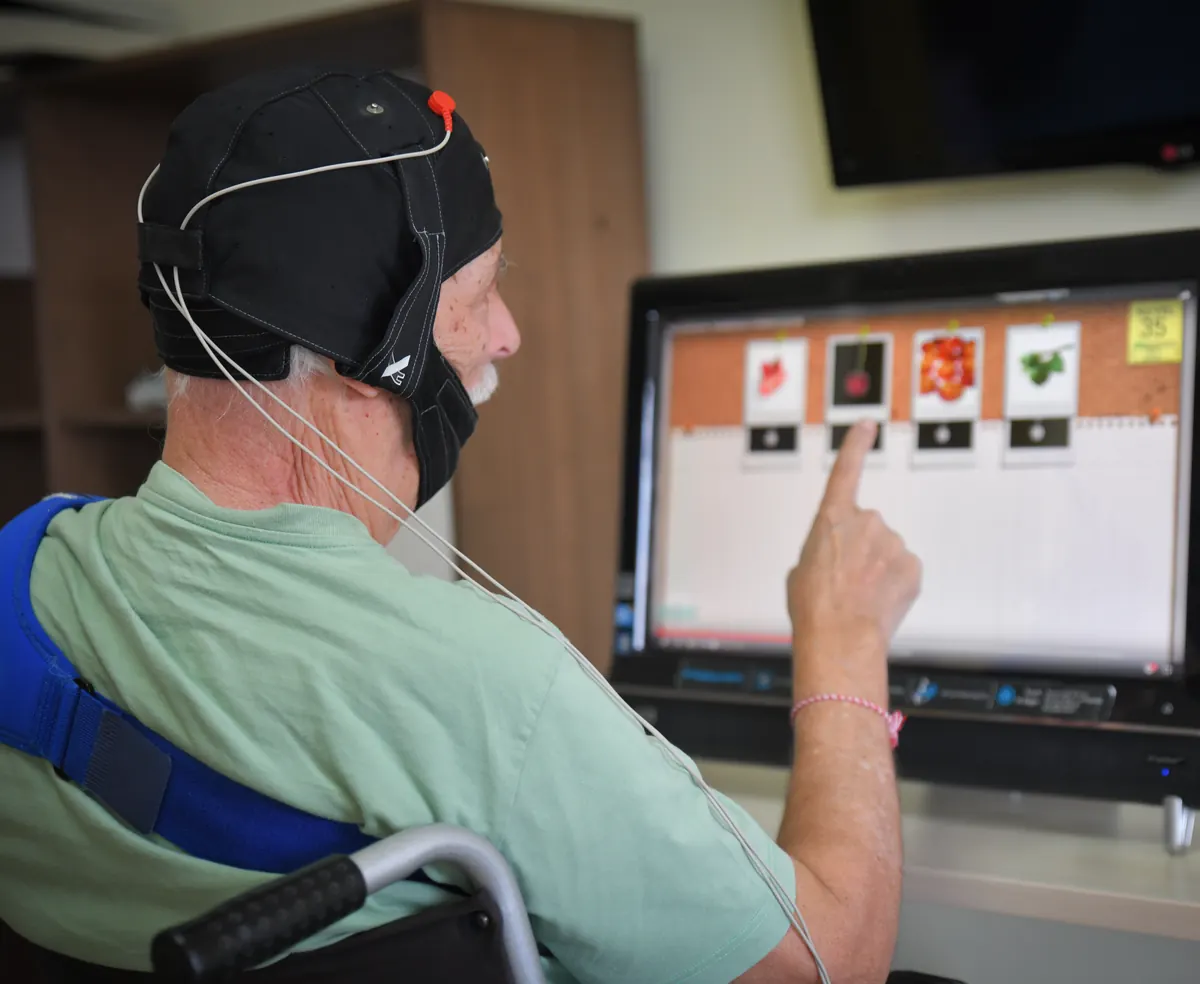
Man in a wheelchair wearing a tDCS cap and pointing to pictures on a touch screen during a computer task

Non-invasive neuromodulation therapy in rehabilitation

Neuromodulation therapy with high-definition tDCS, ear-based vagus nerve stimulation and transcranial photobiomodulation, used alongside your therapy for some patients after a safety check by your physician.

No referral or paperwork needed for the first call.

Neuromodulation at Evexia Plus

At Evexia Plus, neuromodulation means gentle stimulation of the brain or a nerve through the skin, with no surgery and no implants. It is never a treatment on its own: it runs alongside the therapy you are already doing, such as arm and hand practice or memory and attention work. Your physician in Physical Medicine and Rehabilitation decides whether it suits you, after a safety check, and trained staff apply it. Not every patient has it. It sits within a programme of at least 3 hours of therapy a day, and the cost is reimbursable by the HSE.

Non-invasive neuromodulation therapy: the methods we use

Your physician chooses the method, if any, and the therapy task it runs alongside.

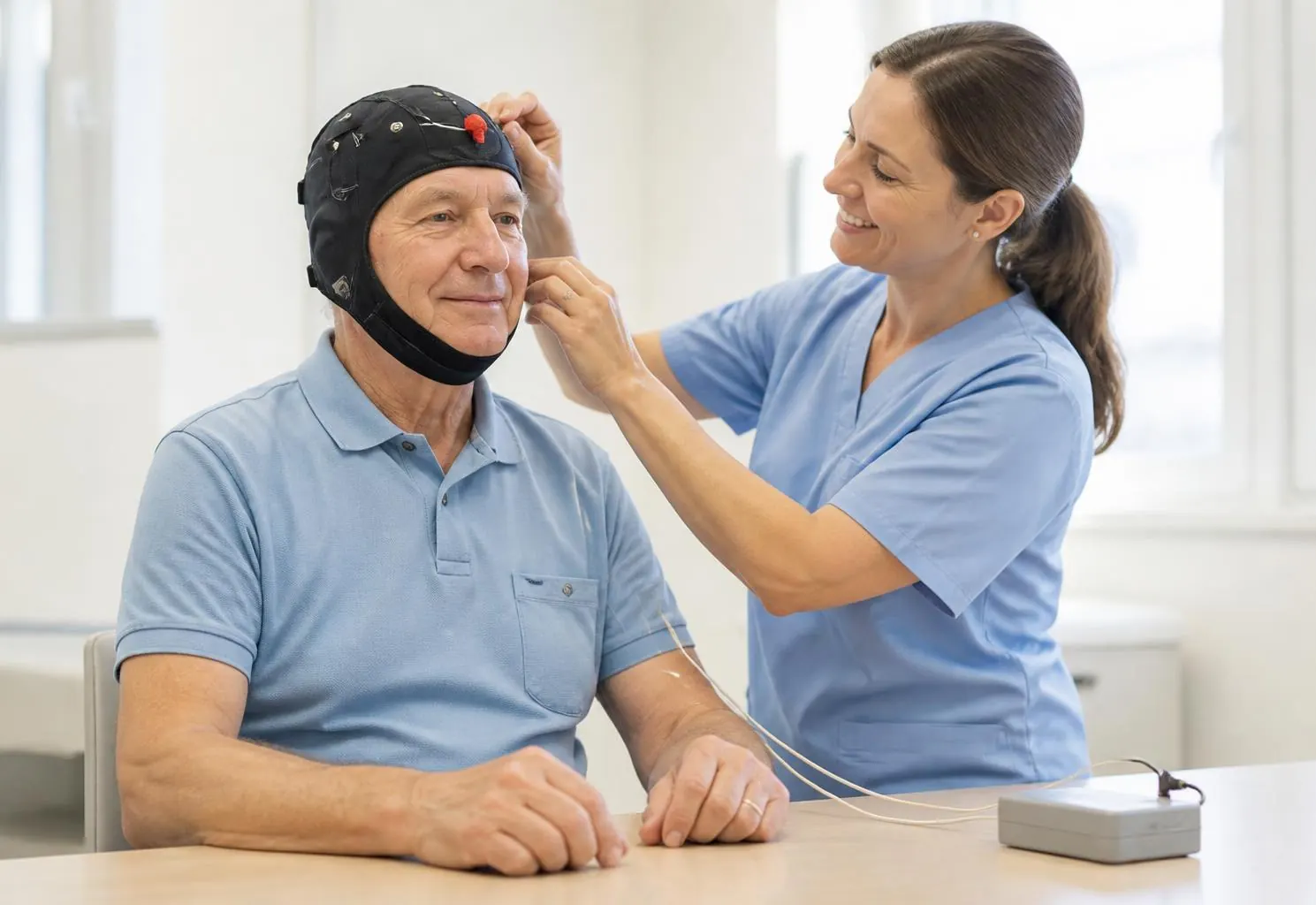
Therapist fitting a soft tDCS cap with small electrodes on an older man's head

High-definition tDCS

Transcranial direct current stimulation (tDCS) passes a very weak electrical current through electrodes held in a soft cap. The high-definition version uses several small electrodes, so the current stays in a smaller, more focused area. Most people feel only a mild tingle at first.
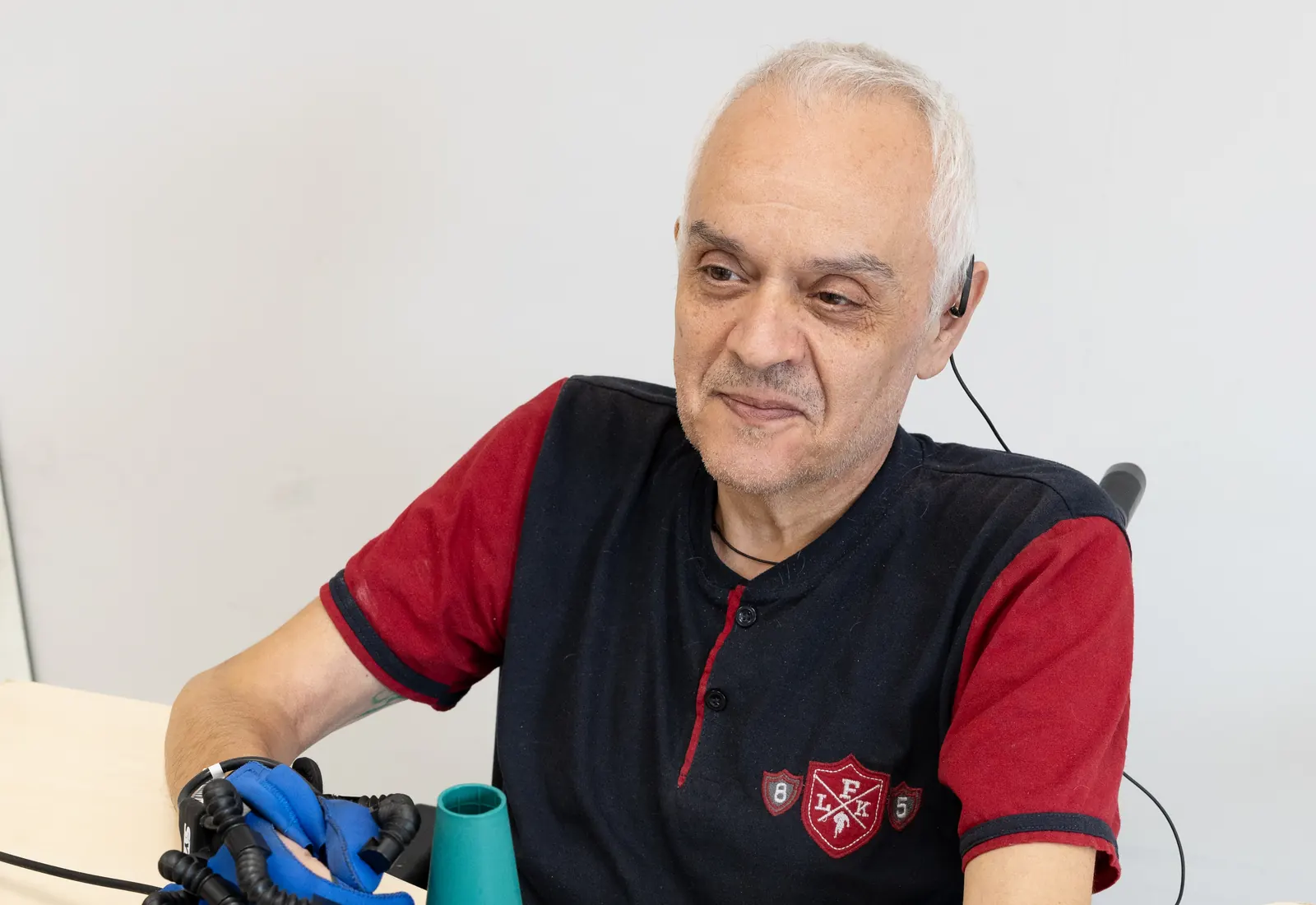
Man with a small clip on his ear for vagus nerve stimulation during hand practice

Ear-based vagus nerve stimulation

A small clip on the inner ridge of your ear sends gentle pulses to a branch of the vagus nerve, the nerve that runs from the brain to the body. It is used during arm and hand practice, mainly after a stroke. Nothing is implanted.

Other methods and safety checks

tDCS during therapy

The stimulation runs while you practise, for example arm and hand exercises with your occupational therapist or physiotherapist, or computer tasks for memory and attention. The aim is to make the brain areas used in the task slightly more ready to learn.

Transcranial photobiomodulation (light therapy)

Low-power red and near-infrared light shone on your head through a soft pad or cap. The light does not heat or cut, and you sit or lie down while it runs. Eye protection may be used.

A safety check first, and comfort checks every session

Before any stimulation, your physician checks for anything that rules it out or needs extra care, such as a pacemaker, metal or implants in the head, epilepsy, pregnancy or skin problems on the scalp. Staff then check your skin and comfort at every session.

Neuromodulation is part of the inpatient programme, which is reimbursable by the HSE under the EU Cross-Border Healthcare Directive.

You pay the hospital, then claim the cost back, and we give you every document the claim needs. It works the same way from anywhere in Ireland, from Dublin, Cork and Wexford to Sligo and Kerry.

How it works, step by step

Questions about neuromodulation therapy

Something else on your mind? Call us on 01 263 3051.

What is neuromodulation in simple terms?

Neuromodulation means changing how nerve cells work by stimulating them. At Evexia Plus it is always non-invasive: a very weak current, light or gentle pulses applied through the skin of your head or ear, with no surgery or implants. It runs alongside therapy for some patients, never instead of it. The word is also used for implanted devices for pain, which we do not offer.

What is tDCS?

tDCS (transcranial direct current stimulation) passes a very weak electrical current through electrodes on the scalp while you practise a task. We use the high-definition version, with several small electrodes that keep the current to a smaller area. You wear a soft cap, sit comfortably and do your therapy while it runs. It is always used alongside therapy, not on its own.

Is tDCS safe?

Before any session, your physician screens you for things that rule it out or need extra care, such as a pacemaker, metal or electronic implants in the head, epilepsy, pregnancy or skin problems on the scalp. During sessions most people feel only a tingle or slight itch under the electrodes. Staff check your skin and comfort throughout, and you can ask to stop at any time.

Is tDCS the same as TMS?

No. TMS (transcranial magnetic stimulation) uses a magnetic coil held over the head and is mainly used for depression. tDCS uses a very weak electrical current through electrodes in a soft cap, and it runs during your therapy. At Evexia Plus we use tDCS, not TMS.

What is photobiomodulation?

Photobiomodulation is light therapy with low-power red and near-infrared light. Applied to the head, it is called transcranial photobiomodulation. The light does not heat or cut: you sit or lie down while a soft pad or cap rests on your head, and eye protection may be used. At Evexia Plus it is used alongside therapy for some patients, if your physician recommends it.

Who can have neuromodulation?

Only some adults, after a stroke, a brain injury or a spinal cord injury, or with multiple sclerosis or another neurological condition, and only after your physician's safety check. We do not use it for children, and it is not part of our programmes for FND, Parkinson's, cauda equina syndrome or orthopaedic rehabilitation. Your physician will explain why it is or isn't suggested for you.

Is neuromodulation reimbursable by the HSE?

When your physician includes it, neuromodulation is part of the inpatient rehabilitation programme, which is reimbursable by the HSE under the EU Cross-Border Healthcare Directive. You don't need a medical card or private insurance. We send a written estimate in English before you commit, and give you every document the claim needs.

Talk to us about neuromodulation

Tell us a little about you and what you'd like to work on. We reply within one working day, Monday to Friday.
Thank you. Your enquiry has been received. We will reply within one working day, Monday to Friday. If you need to speak with us sooner, please call 01 263 3051.
Your enquiry could not be submitted. Please try again, or contact us directly on 01 263 3051 or at info@evexia.ie.