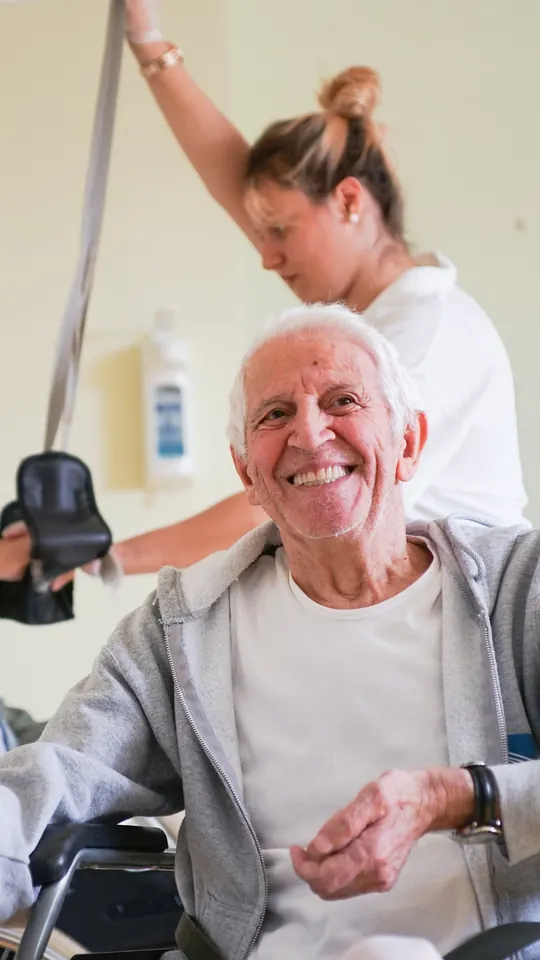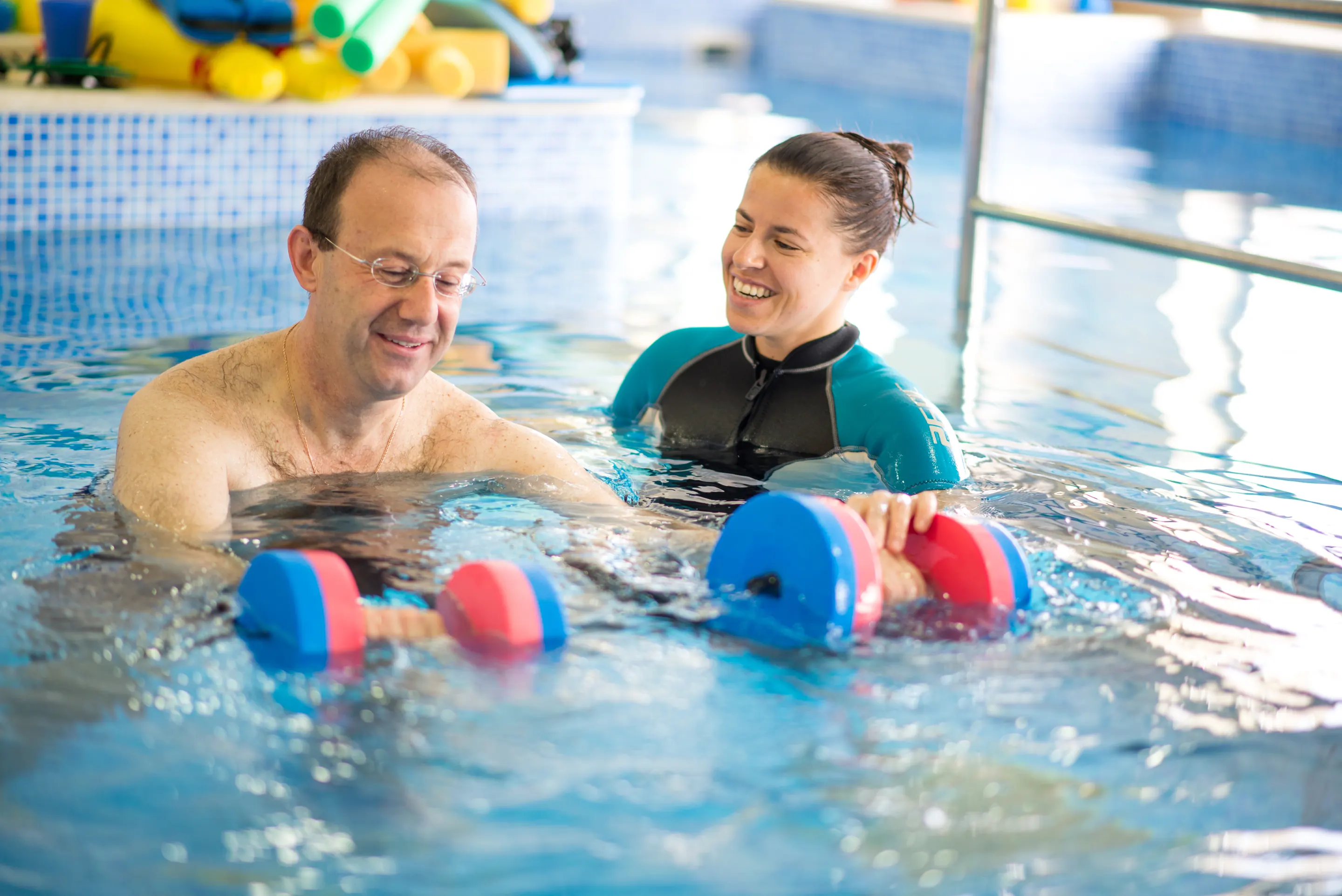
Physiotherapist and a smiling man exercising with water dumbbells in the hydrotherapy pool

Hydrotherapy and aquatic physiotherapy in our three pools

Hydrotherapy pools for rehabilitation in Greece, two indoor and one outdoor, with aquatic physiotherapy, the Halliwick concept, the Bad Ragaz Ring Method, gait practice in the water and children's sessions.

No referral or paperwork needed for the first call.

Hydrotherapy at Evexia Plus

At Evexia Plus, hydrotherapy is physiotherapy in water. The water carries part of your weight, so you can often stand, step and move in the pool before you can on land. Most sessions are one-to-one with a physiotherapist, in two indoor pools and an outdoor pool used in the warmer months, each with three depths. Your physician first checks that the pool is safe for you, and a physician in Physical Medicine and Rehabilitation sets your goals with you. Hydrotherapy is part of at least 3 hours of therapy a day, alongside therapy on land, and the cost is reimbursable by the HSE.

Our hydrotherapy pools, methods and equipment

Your physiotherapist chooses from these to suit your goals, and changes the plan as you progress.

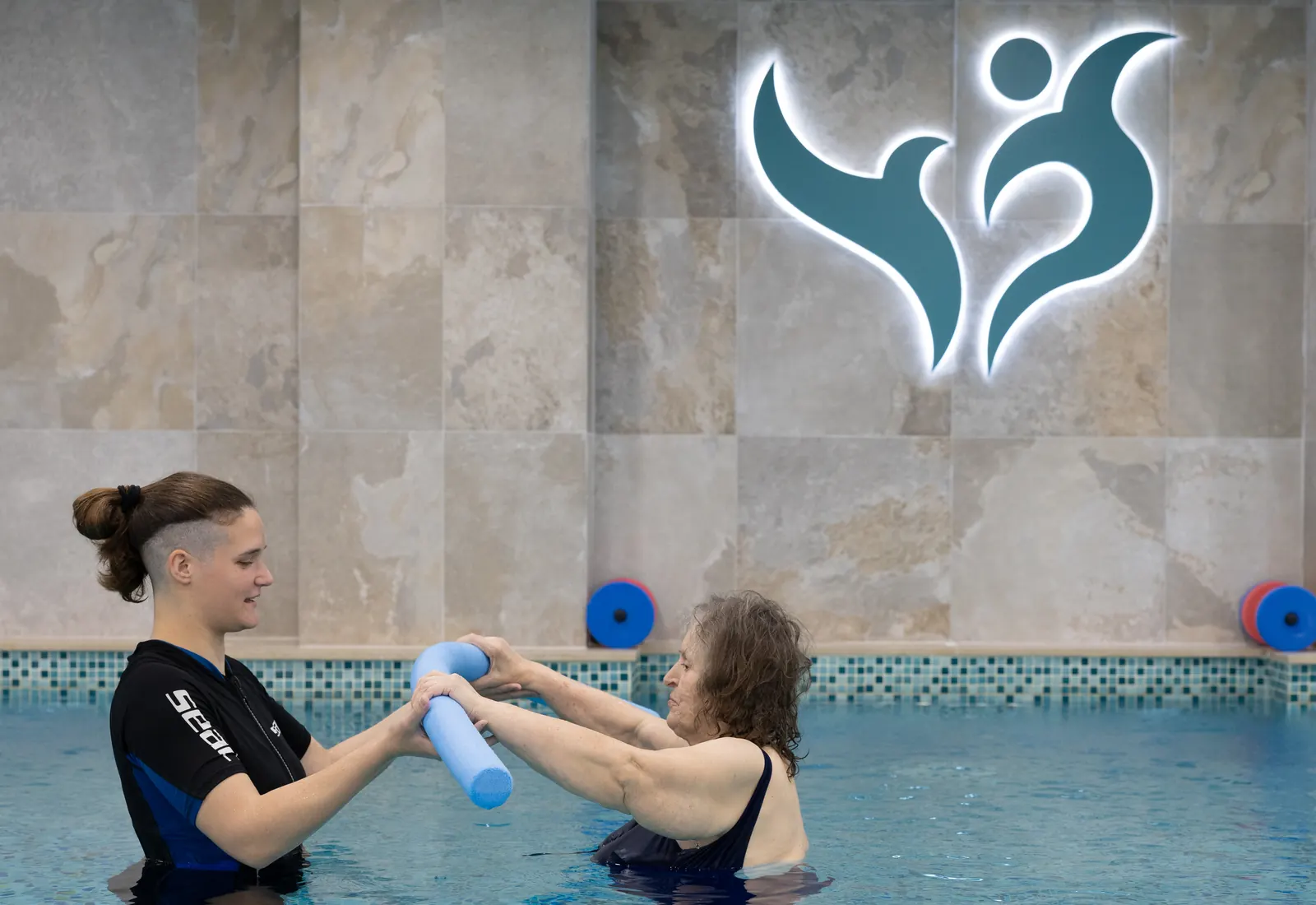
Physiotherapist and a patient exercising with a float in the indoor hydrotherapy pool at Evexia Plus

Three pools, each with three depths

Two indoor pools, kept at about 32°C, and an outdoor pool used in the warmer months. Each has three depths, so your physiotherapist can choose how much the water supports you, from standing in shallow water to exercise in deeper water. In the warmer months there are also group sessions in the outdoor pool. See the pools on our Facilities page.
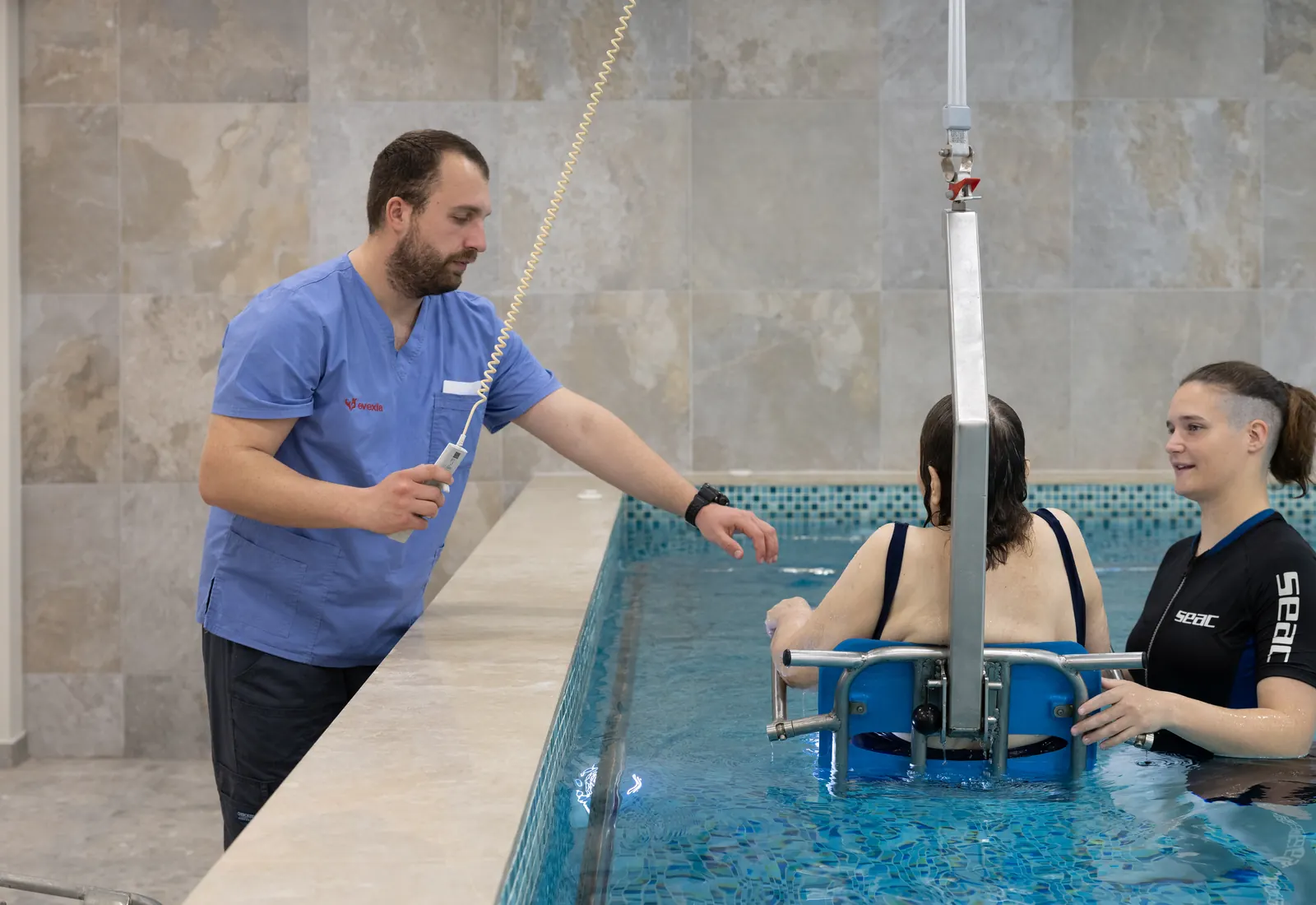
Physiotherapist lowering a woman into the hydrotherapy pool in a hoist chair, with a second physiotherapist in the water

Ramps and hoists into the water

You can walk down a ramp, or a ceiling hoist or a poolside hoist lowers you into the water in a seat or sling and lifts you out at the end. You don't need to manage steps to get in.

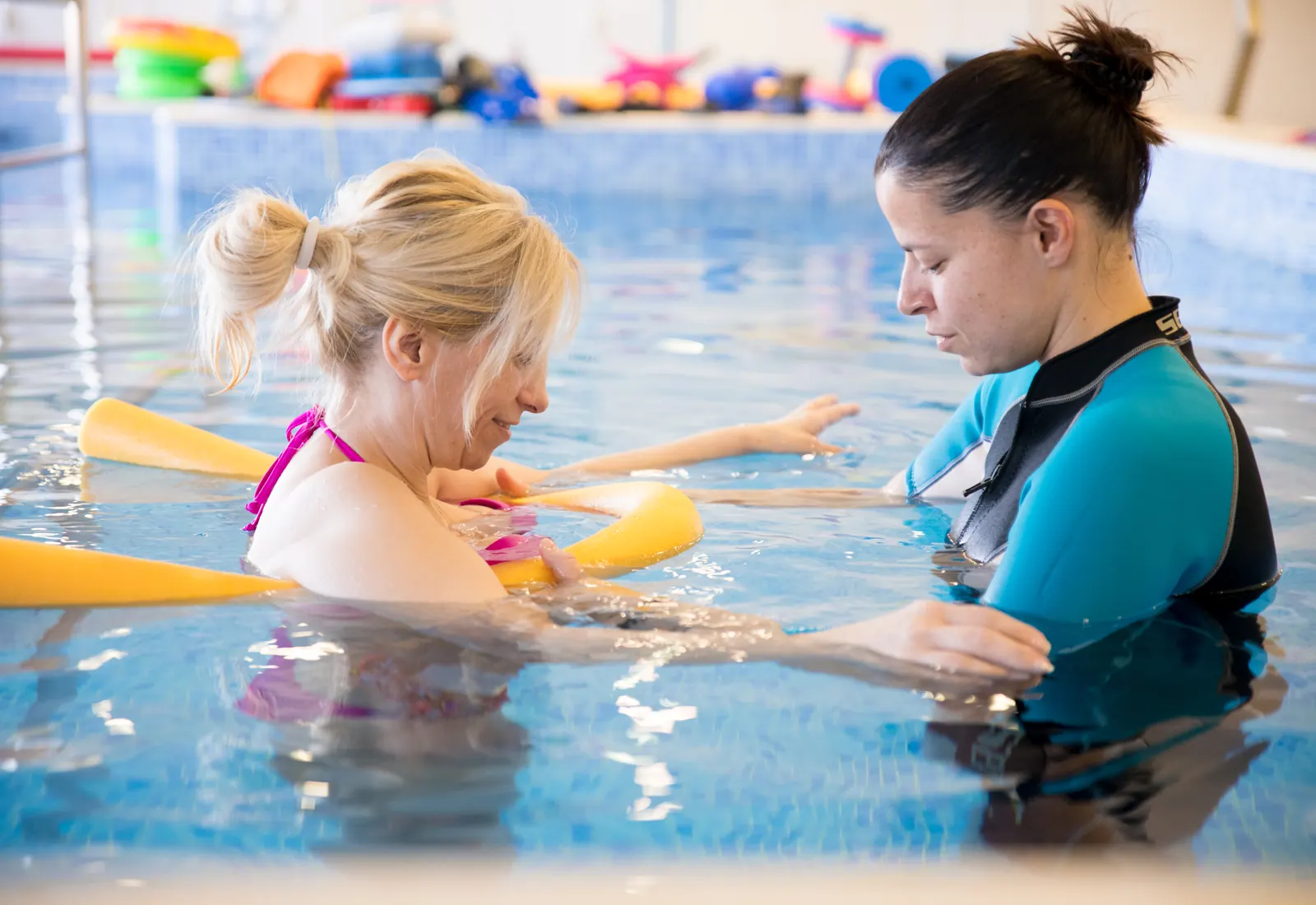
Physiotherapist supporting a woman holding a float in the hydrotherapy pool

Balance and water skills: the Halliwick concept

A step-by-step way of becoming safe and balanced in water: breathing control, rolling, floating and moving. Your physiotherapist's hands support you at first, and less as you gain control.

Physiotherapist holding a man floating on his back in the hydrotherapy pool

Hands-on exercise in the water: the Bad Ragaz Ring Method

You float on your back, supported by rings or floats, while your physiotherapist holds you at one point. You push and pull against the hold to move through the water, working on strength, movement and trunk control.

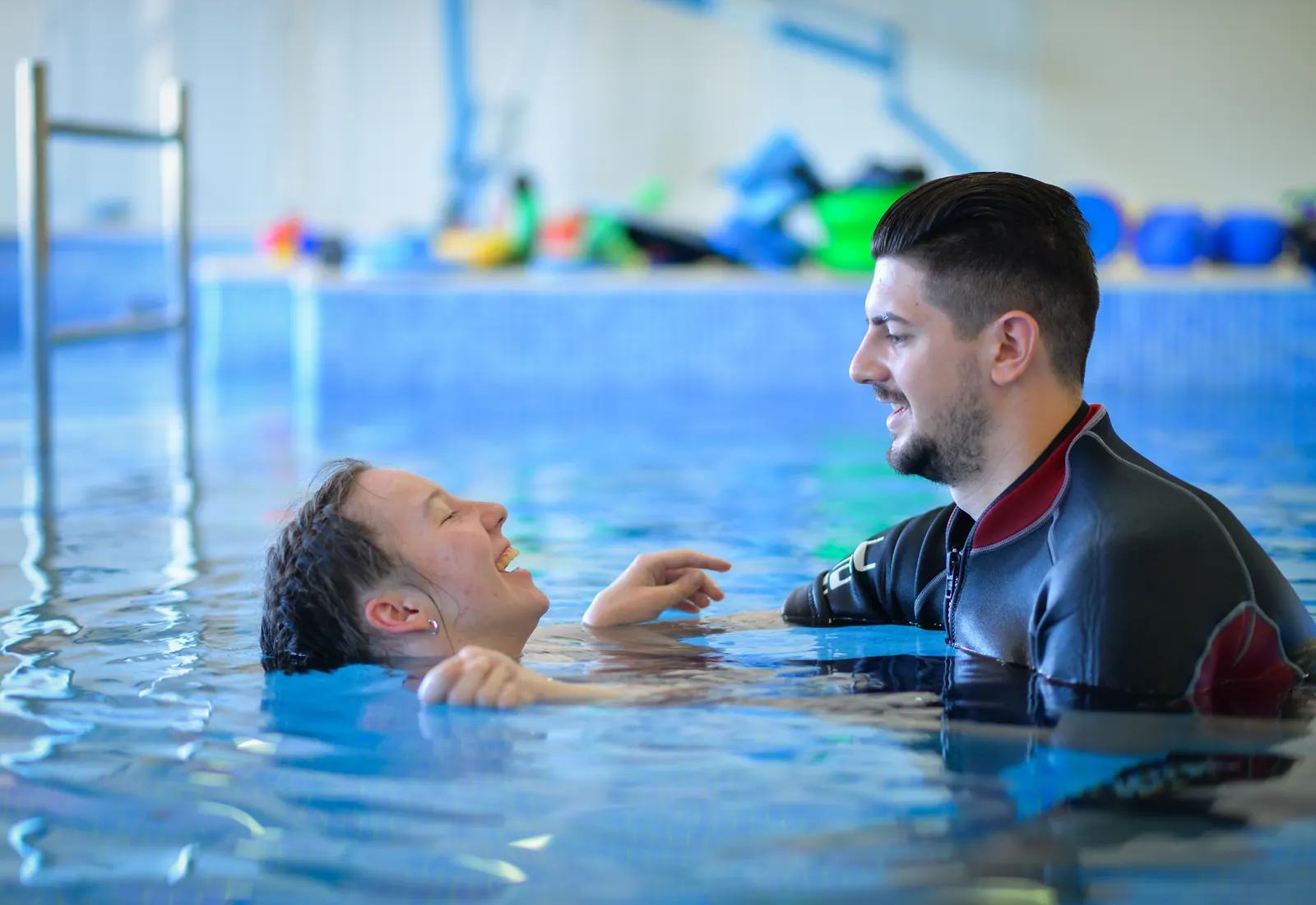
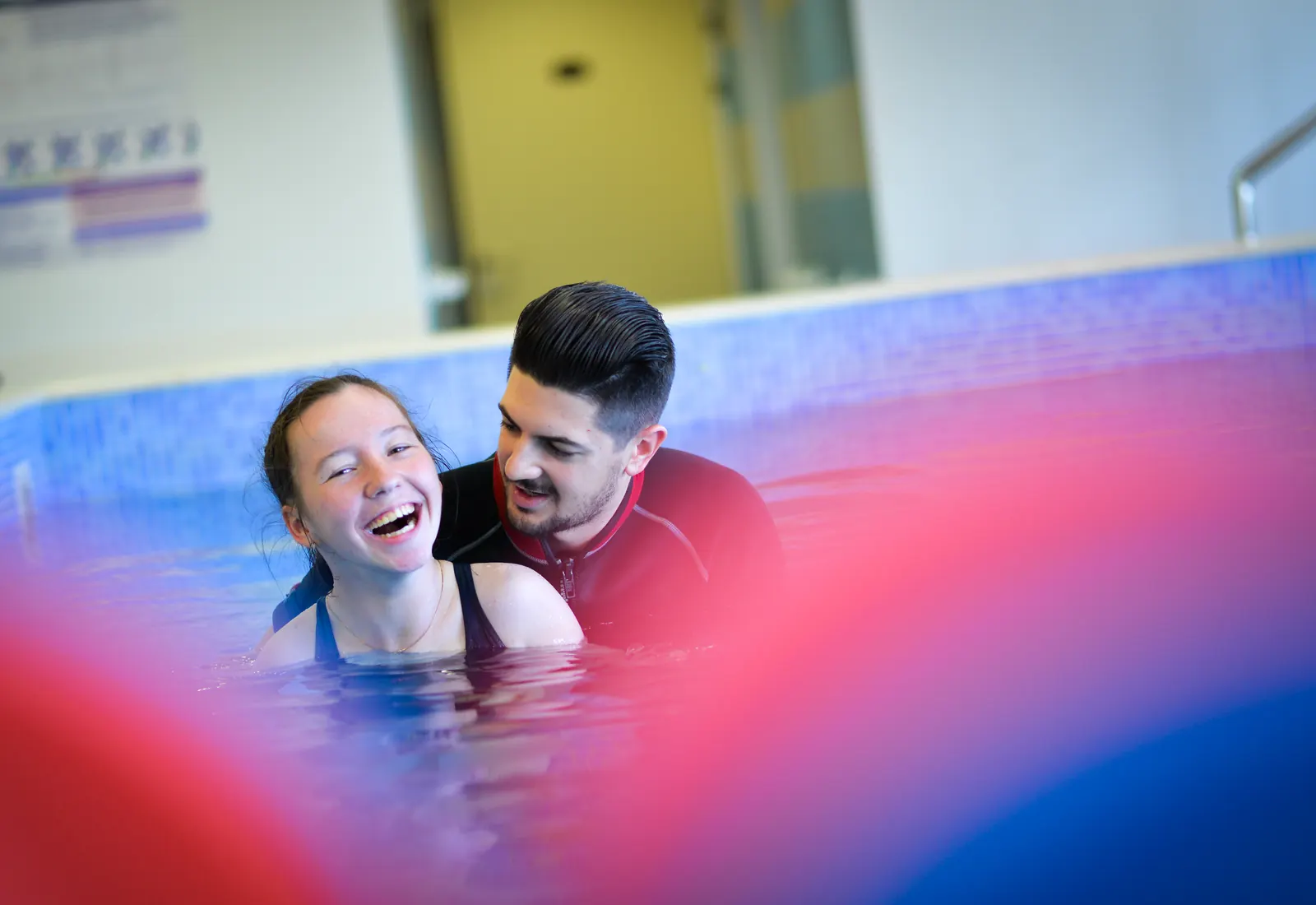
Laughing girl in the hydrotherapy pool with her physiotherapist

Children's sessions

Pool sessions for children built on play, games and confidence in the water, using the Halliwick concept, with a physiotherapist beside your child throughout.

More methods and equipment

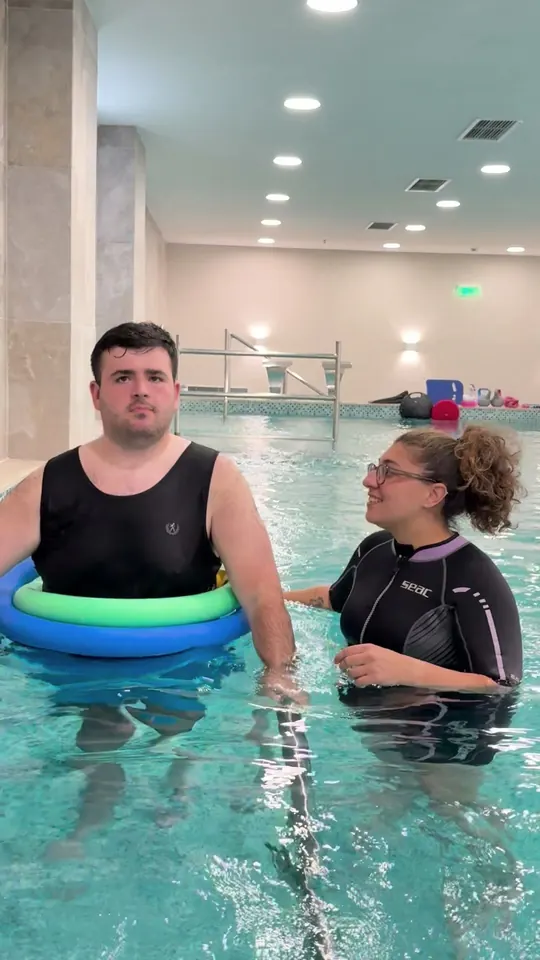
Gait practice in the water

Practising your gait forwards, sideways and backwards in chest-deep water, holding the rail with your physiotherapist beside you, then without support. The water carries part of your weight, so there is less fear of falling.

Pool exercise equipment

Floats and ankle cuffs, underwater steps and balance platforms, and an exercise bike in the pool, used either to support you or to add resistance.

Underwater massage (hydromassage)

A bath with jets of water that massage the muscles. Your physiotherapist decides whether it is part of your sessions.

A safety check before your first session

Your physician checks that the pool is safe for you, for example with a wound, a catheter, seizures, low blood pressure or sensitivity to heat, and the team plans each session around what they find.

Hydrotherapy is part of the inpatient programme, which is reimbursable by the HSE under the EU Cross-Border Healthcare Directive.

You pay the hospital, then claim the cost back, and we give you every document the claim needs. Wherever you live in Ireland, from Cork and Kilkenny to Westmeath and Donegal, the route is the same.

How it works, step by step

Questions about hydrotherapy

Something else on your mind? Call us on 01 263 3051.

What is hydrotherapy used for in rehabilitation?

Hydrotherapy, or aquatic physiotherapy, is exercise therapy in a pool. Because the water carries part of your weight, it is used to practise standing, stepping and balance, to move stiff or weak limbs, and to work on strength and stamina, often before you can do the same on land. At Evexia Plus it always sits alongside therapy on land, never instead of it.

What happens in a hydrotherapy session?

You change, get into the pool by ramp or hoist, and work one-to-one with your physiotherapist in the water. A session might include balance and gait practice, exercises with floats, and hands-on methods such as the Bad Ragaz Ring Method. Your physiotherapist plans each session around your goals and how you feel that day.

What if I can't swim?

You don't need to swim. Your physiotherapist is in the water with you, floats support you, and you work at a depth that feels safe. The Halliwick concept starts with feeling at ease in the water, so people who have never swum take part too.

What should I bring?

A swimsuit or swim shorts. If you need help to change or to get to the pool, our staff help you. Tell us about any wound, catheter or continence needs before your first session, so the team can plan for them.

How do I get into the pool?

By a ramp, or with a hoist: a ceiling hoist or a poolside hoist lowers you into the water in a seat or sling, and lifts you out at the end. You don't need to be able to walk or use steps to have hydrotherapy.

Is hydrotherapy safe for me?

Your physician checks first. Some things mean waiting or taking extra care, such as an open wound, a recent infection, seizures that are not well controlled, low blood pressure or sensitivity to heat with MS. The team then plans the depth, the support and the length of each session around what they find.

Is hydrotherapy reimbursable by the HSE?

Yes. Hydrotherapy is part of the inpatient rehabilitation programme, which is reimbursable by the HSE under the EU Cross-Border Healthcare Directive. You don't need a medical card or private insurance. We send a written estimate in English before you commit, and give you every document the claim needs.

Talk to us about hydrotherapy

Tell us a little about you and what you'd like to work on. We reply within one working day, Monday to Friday.
Thank you. Your enquiry has been received. We will reply within one working day, Monday to Friday. If you need to speak with us sooner, please call 01 263 3051.
Your enquiry could not be submitted. Please try again, or contact us directly on 01 263 3051 or at info@evexia.ie.