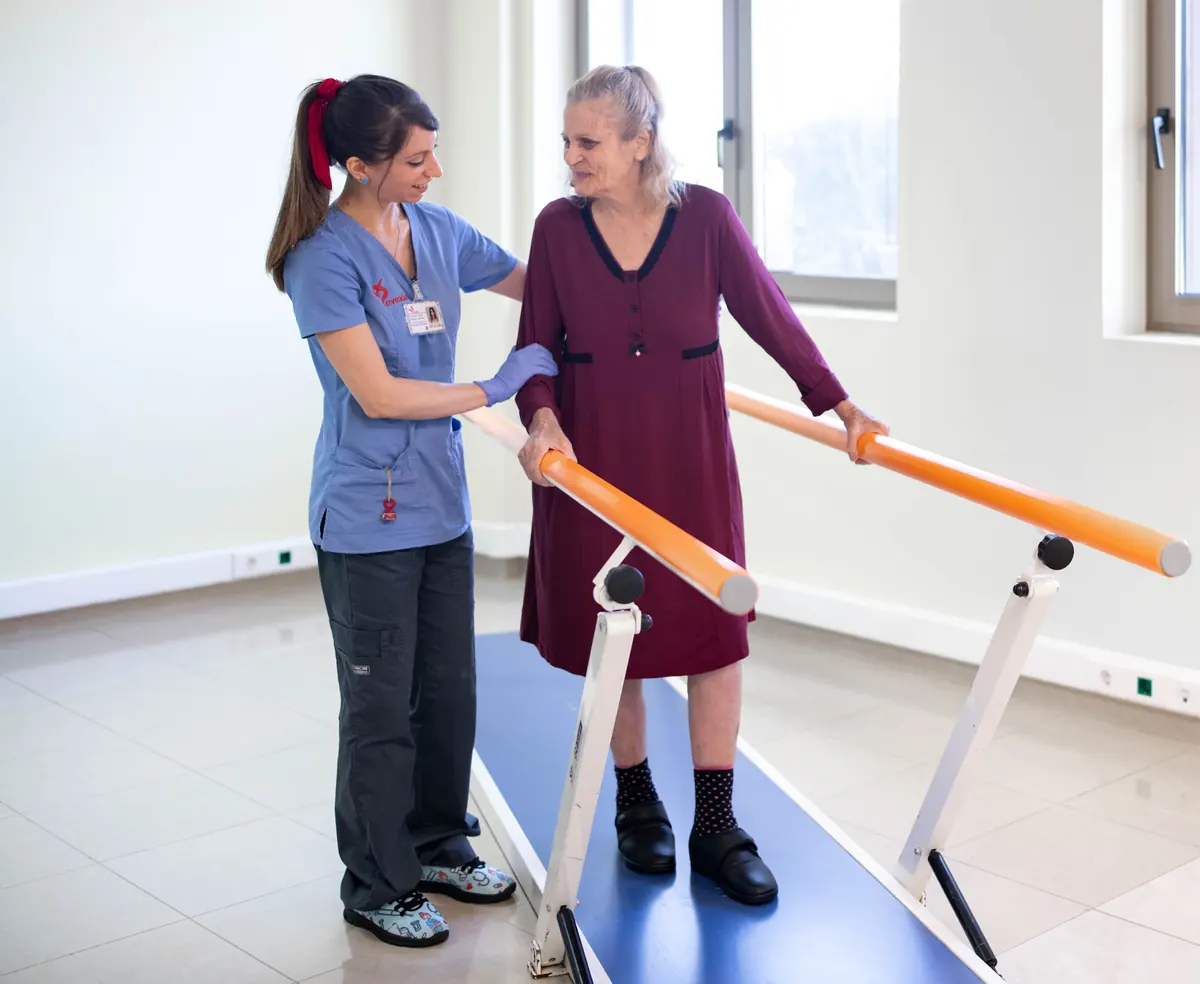
Physiotherapist supporting an older woman during gait training between the parallel bars

Neurological physiotherapy and robotic gait training

Robotic gait training, body-weight-supported gait training, FES, virtual reality and hands-on neurological physiotherapy, chosen around the goals you set with your physiotherapist.

No referral or paperwork needed for the first call.

Physiotherapy at Evexia Plus

At Evexia Plus, physiotherapy is the part of your programme that works on movement: sitting, standing, gait, balance, strength and fitness. Our physiotherapists work with people after a stroke, a brain or spinal cord injury or orthopaedic surgery, and with conditions such as multiple sclerosis and Parkinson's. A physician in Physical Medicine and Rehabilitation sets your goals with you, and the physiotherapists combine hands-on therapy with equipment such as robotic gait training. Physiotherapy is part of at least 3 hours of therapy a day, and the cost is reimbursable by the HSE.

Robotic gait training and the other equipment we use

Your physiotherapist chooses from these to suit your goals, and changes the mix as you progress.

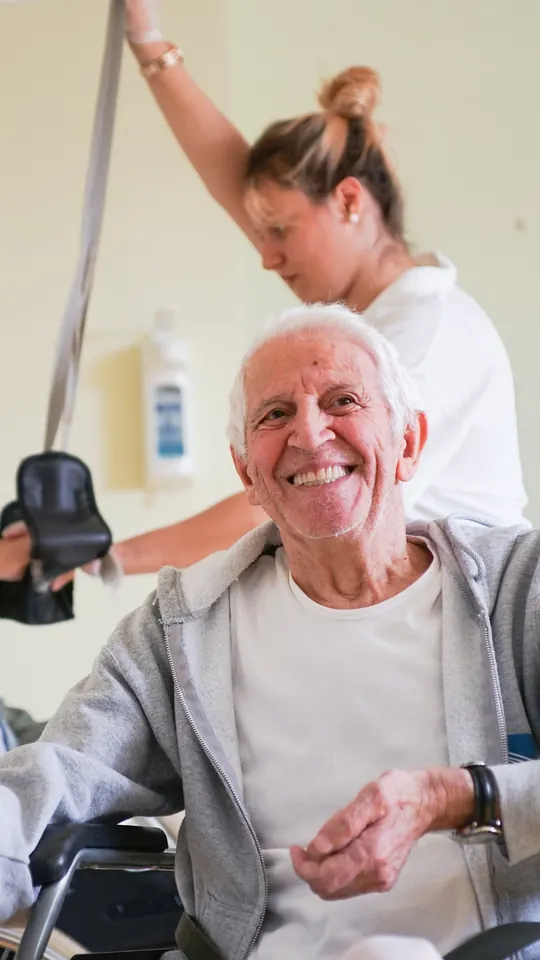
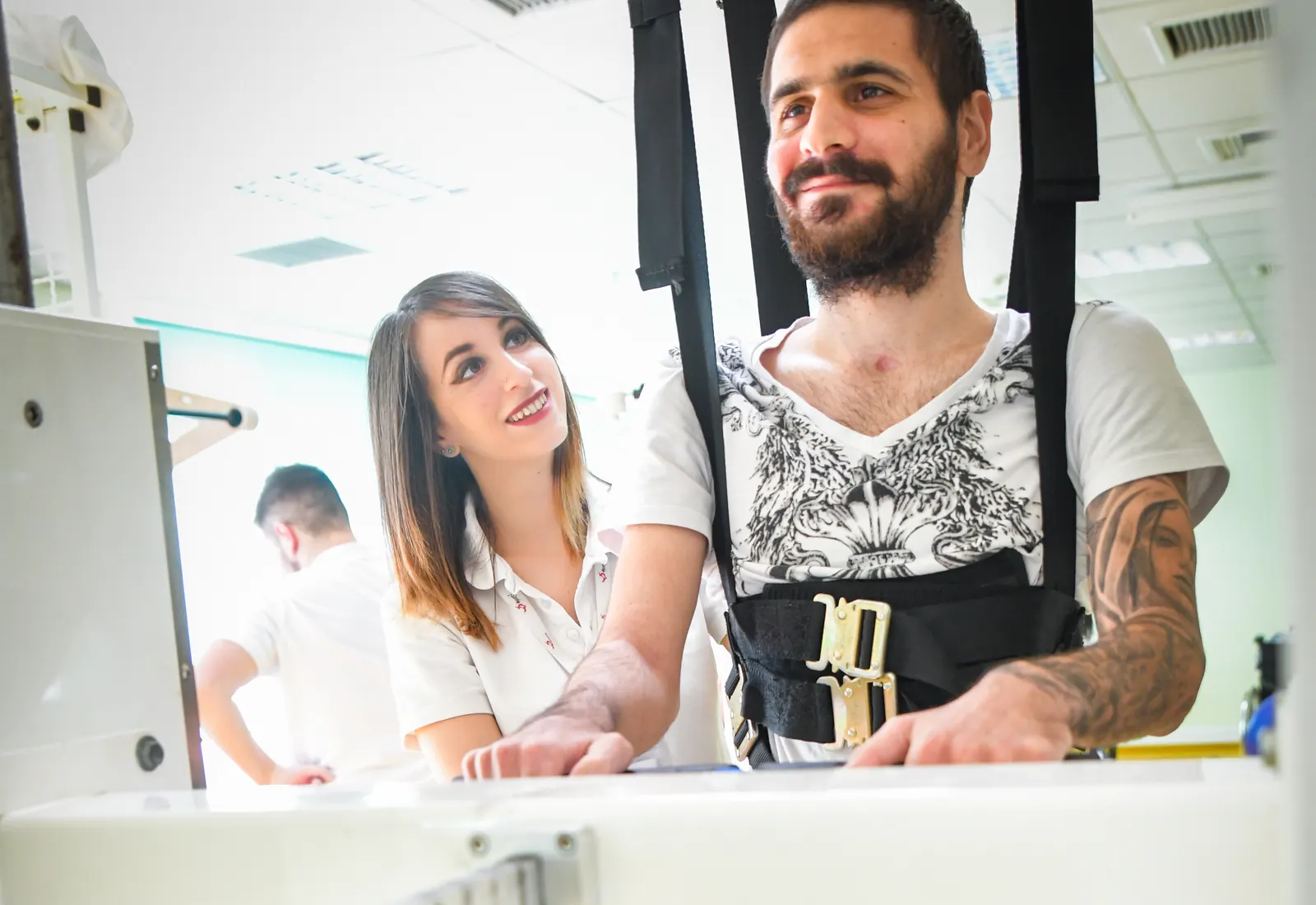
Patient smiling during robotic gait training in a harness, with a physiotherapist beside him

Robotic gait trainer

A gait training machine for people who cannot yet walk well alone. A harness takes part of your weight while the machine guides your legs through each step, and your physiotherapist reduces the help as you get stronger. A child-sized version is used where our physician judges it suitable.
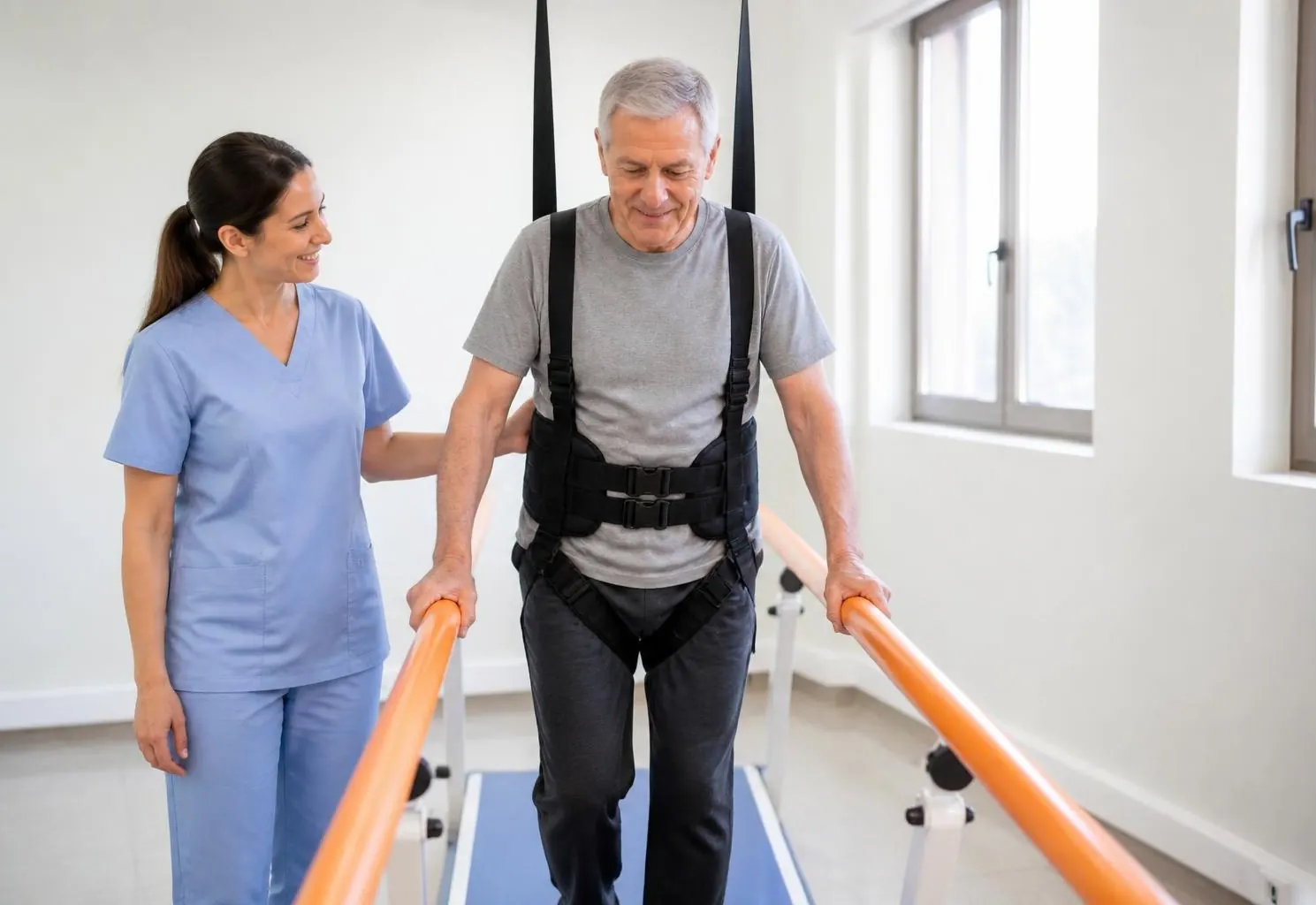
Physiotherapist beside an older man during body-weight-supported gait training between the parallel bars

Body-weight-supported gait training

An overhead harness takes some of your weight, so you can practise your gait safely before your legs can carry you fully. The support comes down as your strength and balance improve.

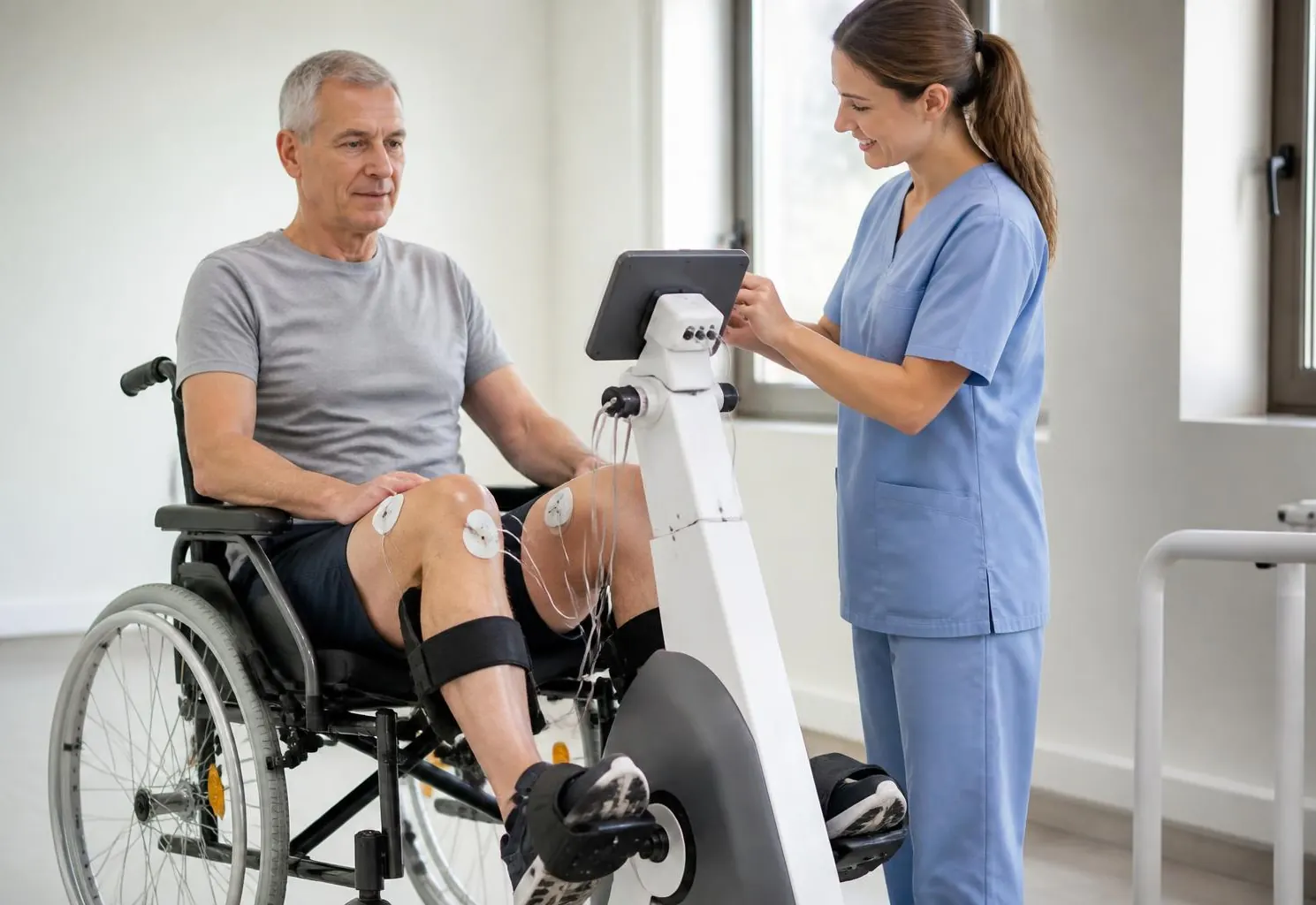
Physiotherapist adjusting the stimulator as a man in a wheelchair does FES cycling, with electrode pads on both thighs

Electrical stimulation: FES and FES cycling

Small electrical pulses through pads on the skin make a weak muscle work. Functional electrical stimulation (FES) times them with a movement, for example lifting your foot as you step (foot drop). In FES cycling, they help your legs turn the pedals of an exercise bike.

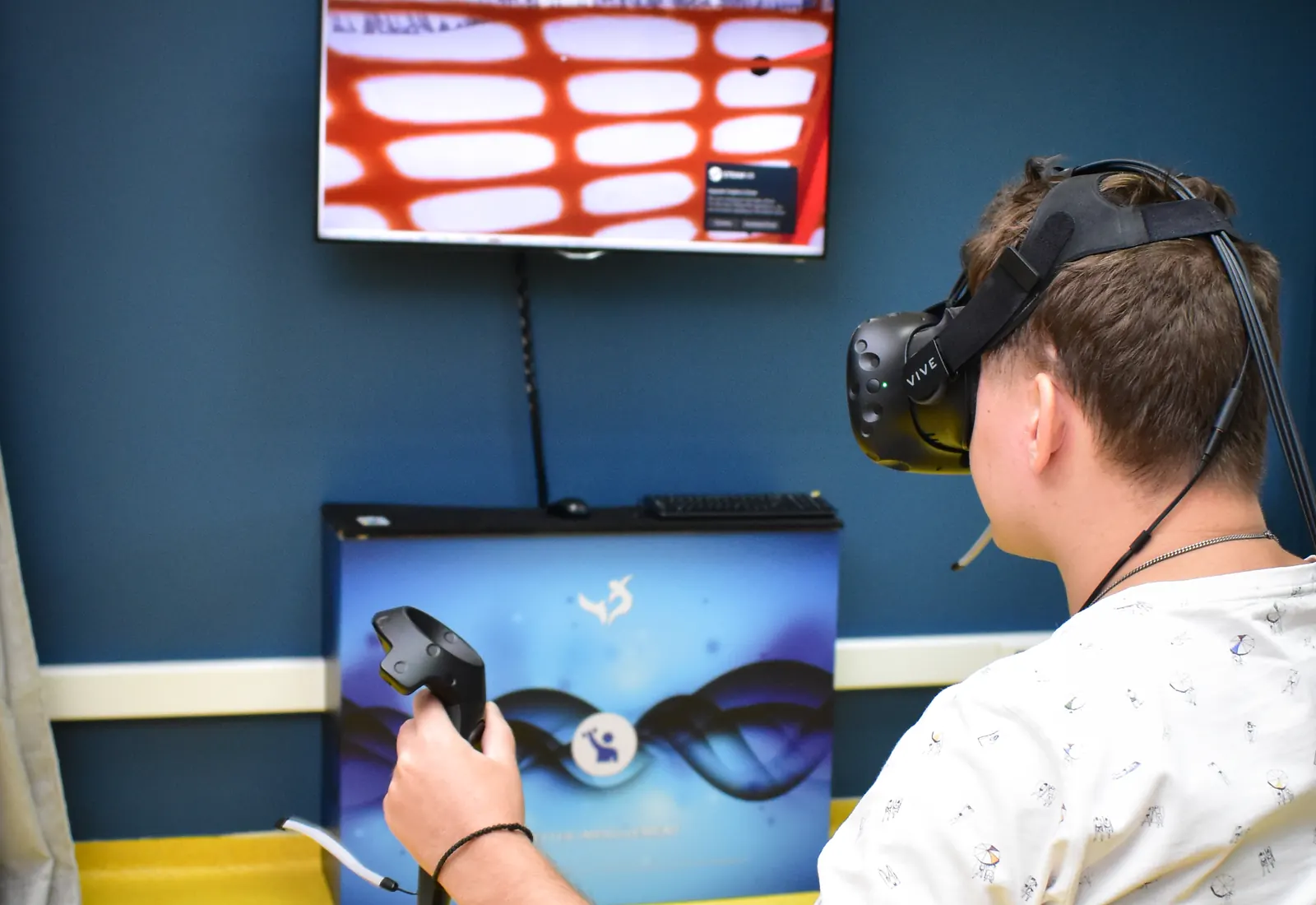
Patient wearing a virtual reality headset and holding a controller during rehabilitation

Virtual reality rehabilitation

Exercises turned into games, on a screen or through a headset. You reach, step or shift your weight to complete each task, and your physiotherapist sets the difficulty and keeps an eye on your posture.

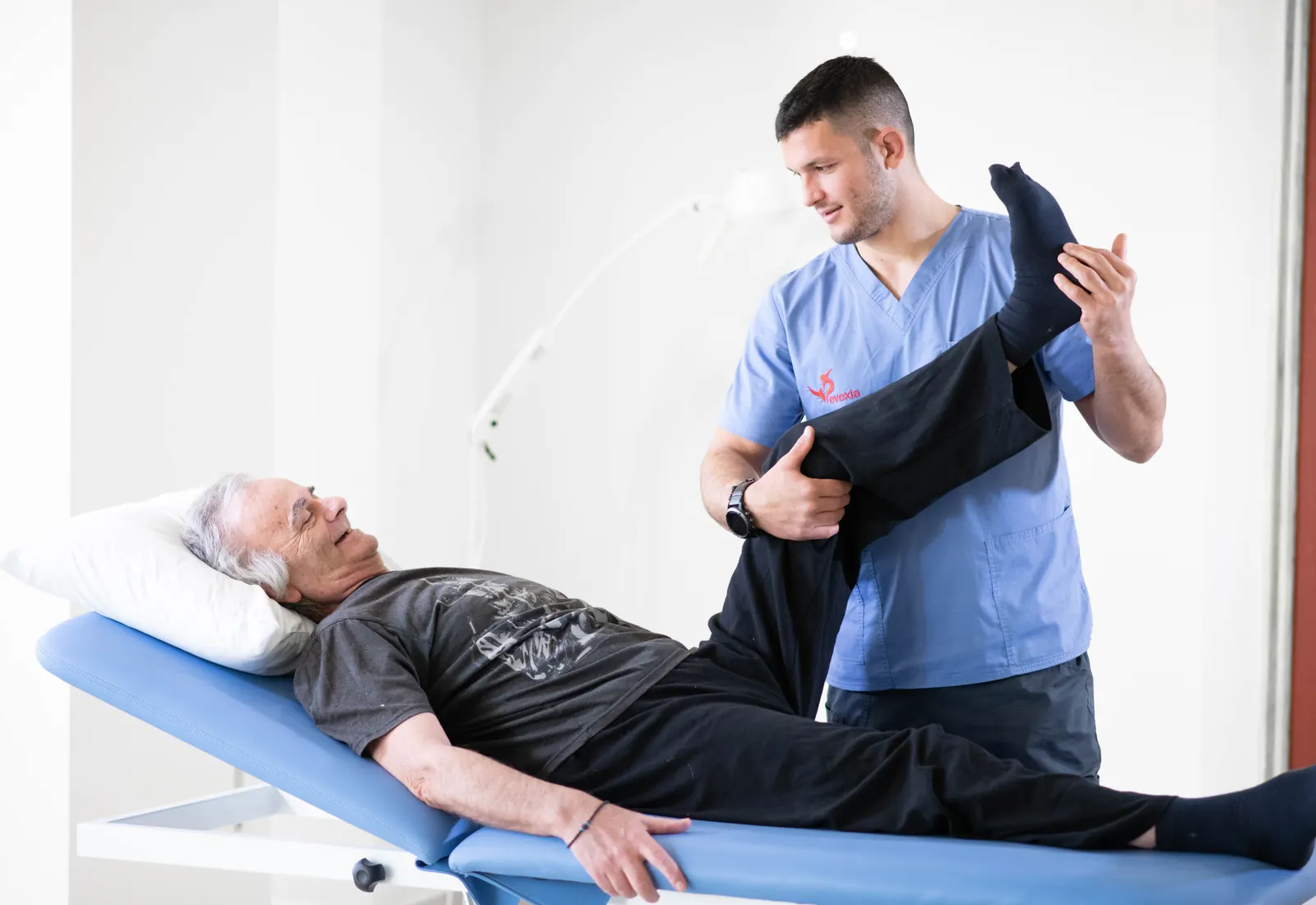
Physiotherapist stretching a smiling patient's leg on a treatment couch

Hands-on physiotherapy: the Bobath concept and PNF

Your physiotherapist guides your trunk and limbs with their hands while you practise sitting, standing, reaching and gait, using approaches such as the Bobath concept and PNF (proprioceptive neuromuscular facilitation).

More equipment and methods

Treadmill training with heart-rate monitoring

Treadmill training at a planned effort, to build stamina. You wear a heart-rate sensor, and your physiotherapist adjusts the speed and slope to keep the effort in a safe range for you.

Tilt table, standing frames and parallel bars

A tilt table raises you gradually from lying towards standing, after a long time in bed or in a wheelchair. Standing frames and parallel bars then help you practise standing and your first steps.

Biofeedback: EMG and balance platforms

Sensors on your skin (no needles) show on a screen the signal a muscle makes when it works, so you can see it switch on or let go. Balance platforms do the same for your weight, so you can practise standing evenly.

LSVT BIG for Parkinson's

A programme for Parkinson's built on large, whole-body movements made with real effort, then carried into your own daily tasks, such as standing up, turning and reaching. Our physiotherapists are certified to deliver LSVT BIG.

Orthoses, air splints and casting

Ankle-foot and other leg orthoses (light braces) support your foot and leg as you walk; we make or fit them on site, or order them in. Air splints hold a limb in position during practice, and children may have casting to lengthen tight muscles gradually.

Breathing physiotherapy and the cough assist machine

For people whose breathing and cough muscles are weak, for example after a neck injury: breathing exercises, help to cough, and a cough assist machine that gives a deep breath in and then helps you cough.

Pelvic-health physiotherapy

Exercises that train the pelvic floor muscles where some control remains, as part of your bladder and bowel plan after a spinal cord injury, cauda equina syndrome or multiple sclerosis.

Managing stiffness and spasticity

When stiff, overactive muscles get in the way, we work on them every day: stretching and positioning, standing on a tilt table, air splints, electrical stimulation and shockwave therapy. Each session then builds strength and practises tasks such as standing and gait.

Physiotherapist beside a young man during gait training with a walking frame in a hospital corridor

How a physiotherapy session works

  1. 01

    Assessment

    In your first days, your physiotherapist looks at how you sit, stand, move and balance, assesses your gait, and asks what matters most to you.

  2. 02

    Your goals

    Your rehabilitation physician and the team agree clear goals with you, such as getting up from a chair on your own or walking to the bathroom.

  3. 03

    Practice

    Each session mixes hands-on therapy with the equipment that suits your goals.

  4. 04

    Weekly review

    Every week the team looks at your progress with you and adjusts the plan.

  5. 05

    Planning for home

    You leave with exercises to keep practising, and a discharge report goes to your GP or consultant in Ireland.

Physiotherapy is part of the inpatient programme, which is reimbursable by the HSE under the EU Cross-Border Healthcare Directive.

You pay the hospital, then claim the cost back, and we give you every document the claim needs. The route is the same wherever you live in Ireland, whether that's Dublin, Cork, Galway, Limerick or Donegal.

How it works, step by step

Who physiotherapy and robotic gait training helps

Working with the rest of your team

Questions about physiotherapy and robotic gait training

Something else on your mind? Call us on 01 263 3051.

What is robotic gait training?

Robotic gait training is practice on a machine that supports part of your weight in a harness and guides your legs through each step. It lets people who cannot yet walk well alone practise safely, repeating the movement many times in one session.

Do I need to be walking to start?

No. You don't need to be walking to be admitted, and you can arrive using a wheelchair. Physiotherapy starts from where you are, with sitting balance, standing and transfers, and moves on to gait training, the harness and the robotic gait trainer when your physician and physiotherapist agree it suits you.

What does a neuro physiotherapist do?

A neurological physiotherapist works with people whose movement is affected by a condition of the brain, spinal cord or nerves, such as a stroke, a brain injury, MS or Parkinson's. The work retrains balance, gait and everyday movement, and deals with weakness, stiffness and tiredness together.

What is functional electrical stimulation used for?

Functional electrical stimulation (FES) uses small electrical pulses through pads on the skin to make a weak muscle work during a movement. A common use is foot drop, where it lifts the front of the foot as you step. It also helps weak legs pedal an exercise bike.

How much physiotherapy will I have each day?

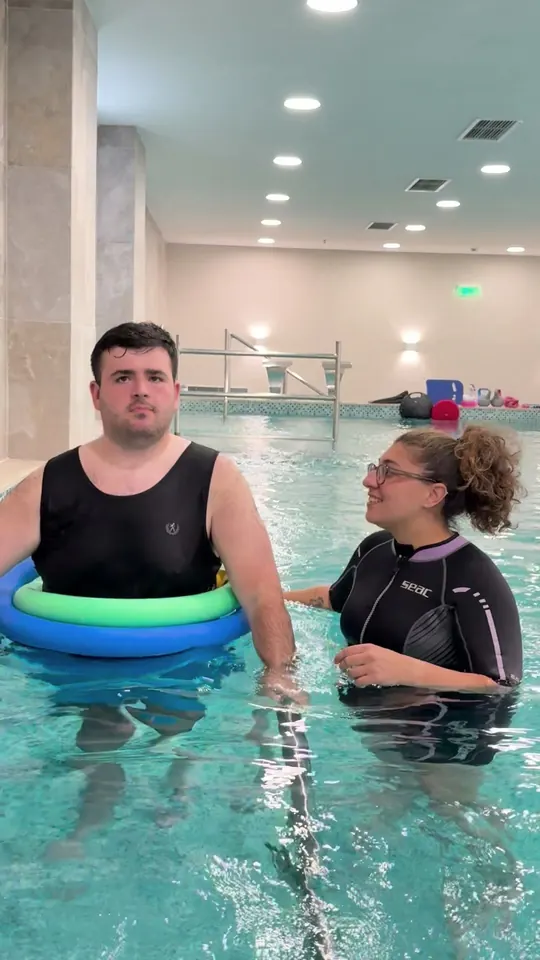
Physiotherapy is part of at least 3 hours of therapy a day, shared with occupational therapy, speech and language therapy, hydrotherapy and psychology. How much of that is physiotherapy depends on your goals. Your rehabilitation physician sets the mix at the start and reviews it with you every week.

Is physiotherapy at Evexia Plus reimbursable by the HSE?

Yes. Physiotherapy is part of the inpatient rehabilitation programme, which is reimbursable by the HSE under the EU Cross-Border Healthcare Directive. You don't need a medical card or private insurance. We send a written estimate in English before you commit, and give you every document the claim needs.

Talk to us about physiotherapy

Tell us a little about you and what you'd like to work on. We reply within one working day, Monday to Friday.
Thank you. Your enquiry has been received. We will reply within one working day, Monday to Friday. If you need to speak with us sooner, please call 01 263 3051.
Your enquiry could not be submitted. Please try again, or contact us directly on 01 263 3051 or at info@evexia.ie.