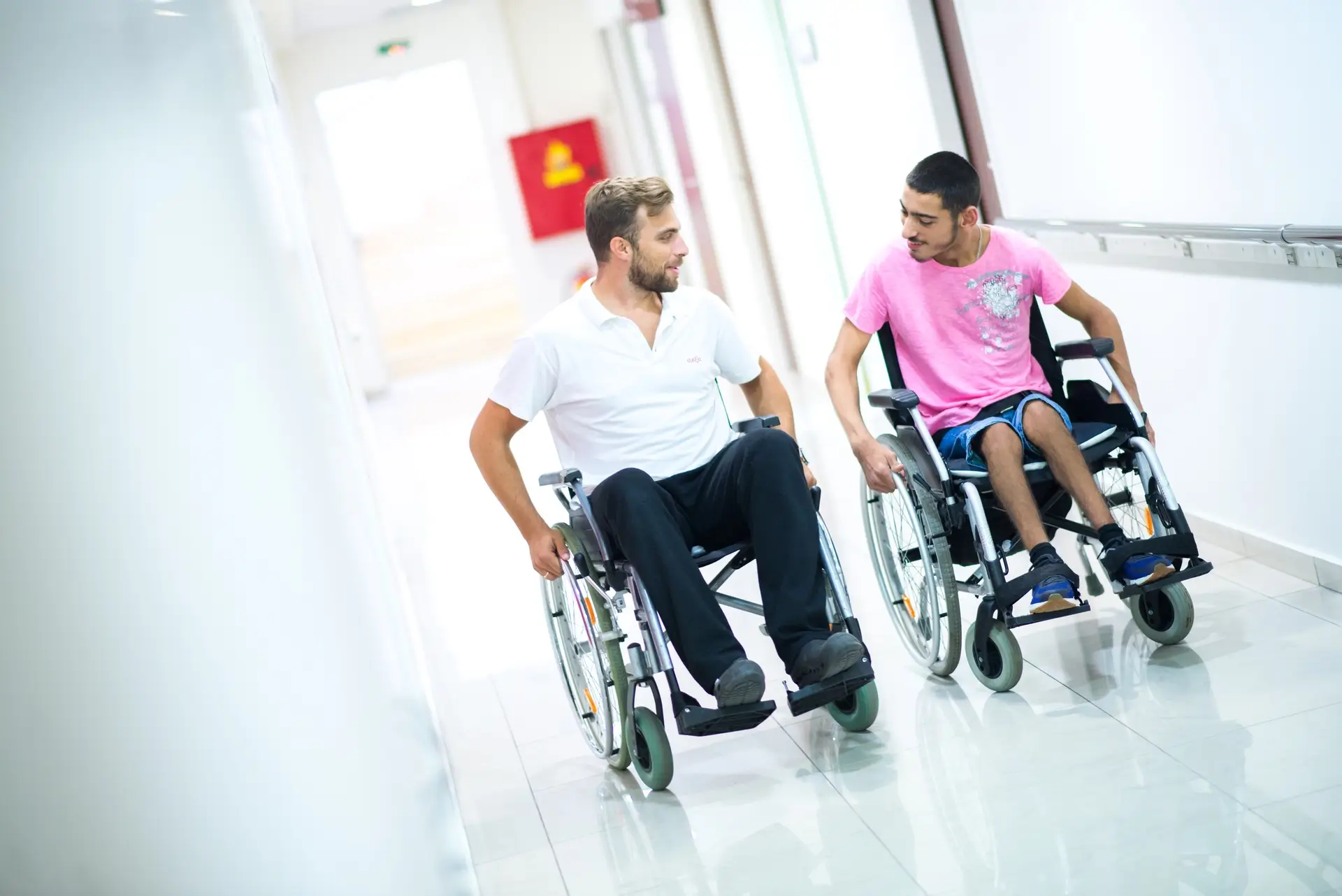
Orthopaedic Rehabilitation For Irish Patients.
Inpatient orthopaedic rehabilitation after a broken hip, complicated joint surgery, an accident or spinal surgery, at a 287-bed Rehabilitation Hospital in Greece. At least 3 hours of therapy a day. Reimbursed by the HSE.
No referral or paperwork needed for the first call.
Orthopaedic rehabilitation at Evexia Plus
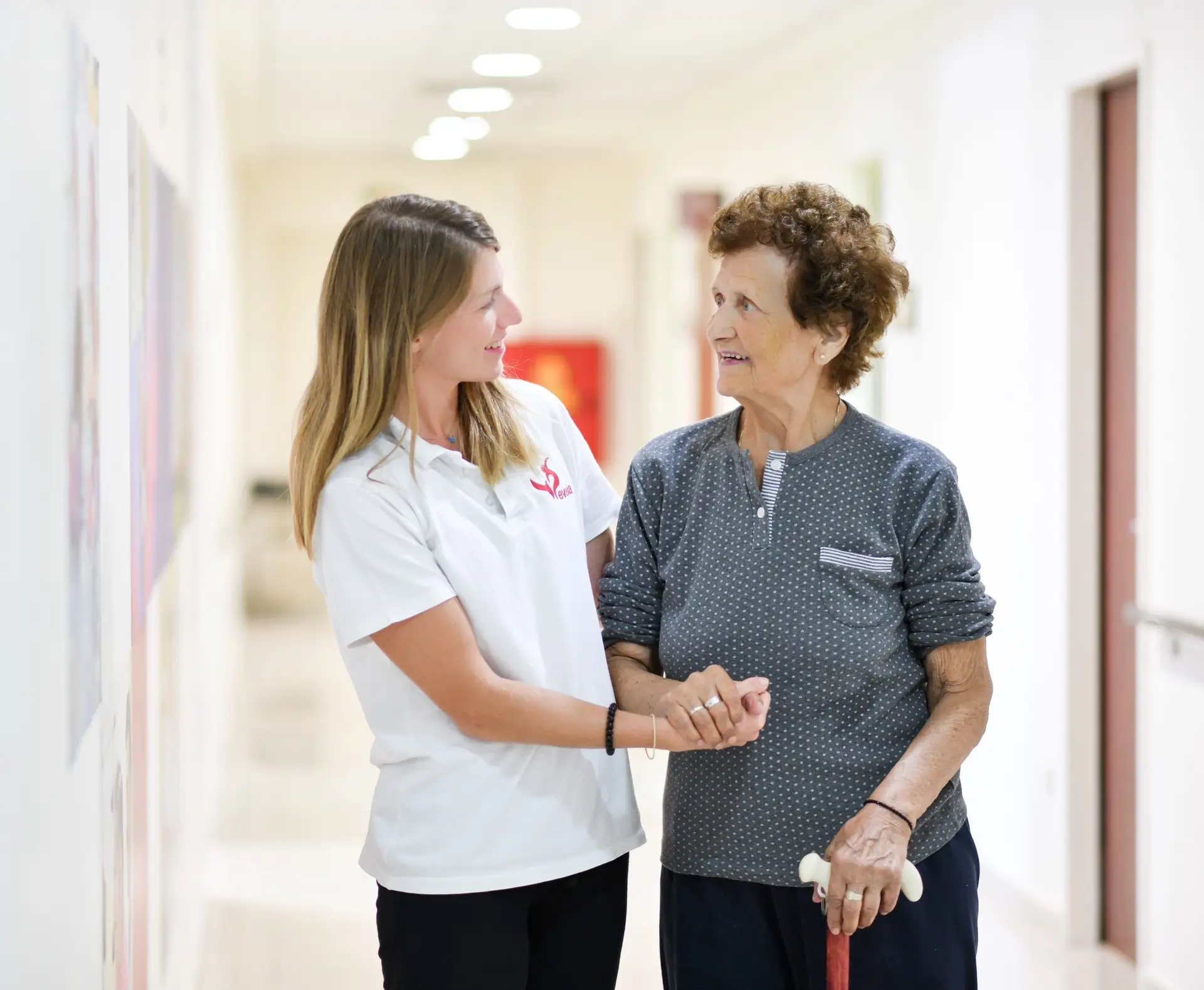
Evexia Plus is a specialist Rehabilitation Hospital near Thessaloniki, Greece, where people from Ireland come for inpatient orthopaedic rehabilitation. It suits people who need more than exercises at home: older adults after a broken hip or pelvis, people whose joint surgery was complicated or repeated, people with several injuries after an accident, and people recovering from major or spinal surgery. A Physical Medicine and Rehabilitation physician leads your programme, with a geriatrician and an orthopaedic surgeon on our medical team. You have at least 3 hours of therapy a day. There is no waiting list, and the cost is reimbursable by the HSE under the EU Cross-Border Healthcare Directive.
- Led by
- A physician in Physical Medicine and Rehabilitation
- Therapy
- At least 3 hours a day, goals reviewed weekly
- Where
- Near Thessaloniki, Greece, about four hours' direct flight from Dublin
- Funding
- Reimbursable by the HSE under the EU Cross-Border Directive
- Start
- No waiting list, once your records are reviewed

How rehabilitation helps after a hip fracture, an accident or major surgery
Surgery repairs the bone or replaces the joint.
Rehabilitation rebuilds what you need to use it: strength, balance, walking and confidence. After a broken hip, older people lose strength quickly in bed, so getting up early and practising daily matters. After several injuries, or repeated or spinal surgery, recovery is often slow and needs a team working to one plan.
Many people recover well at home after a straightforward operation. An inpatient stay helps most when recovery is not straightforward: a complication, several injuries, other health conditions, living alone, or not yet being safe at home.
Rehabilitation or convalescent care?
Convalescent care, sometimes called step down care, usually means rest and nursing support while you get stronger. Rehabilitation is active treatment: at least 3 hours of goal-led therapy a day, reviewed with you every week by a rehabilitation physician, with doctors and nurses on site day and night.
How we support your orthopaedic recovery
Up and moving, every day
Physiotherapy from your first day, with gait training, transfers and stairs practised daily and rest built in between sessions.
A team led by a rehabilitation doctor
A Physical Medicine and Rehabilitation physician leads your care, with a geriatrician on our medical team and doctors and rehabilitation nurses on site 24 hours a day.
Gait, strength and everyday tasks
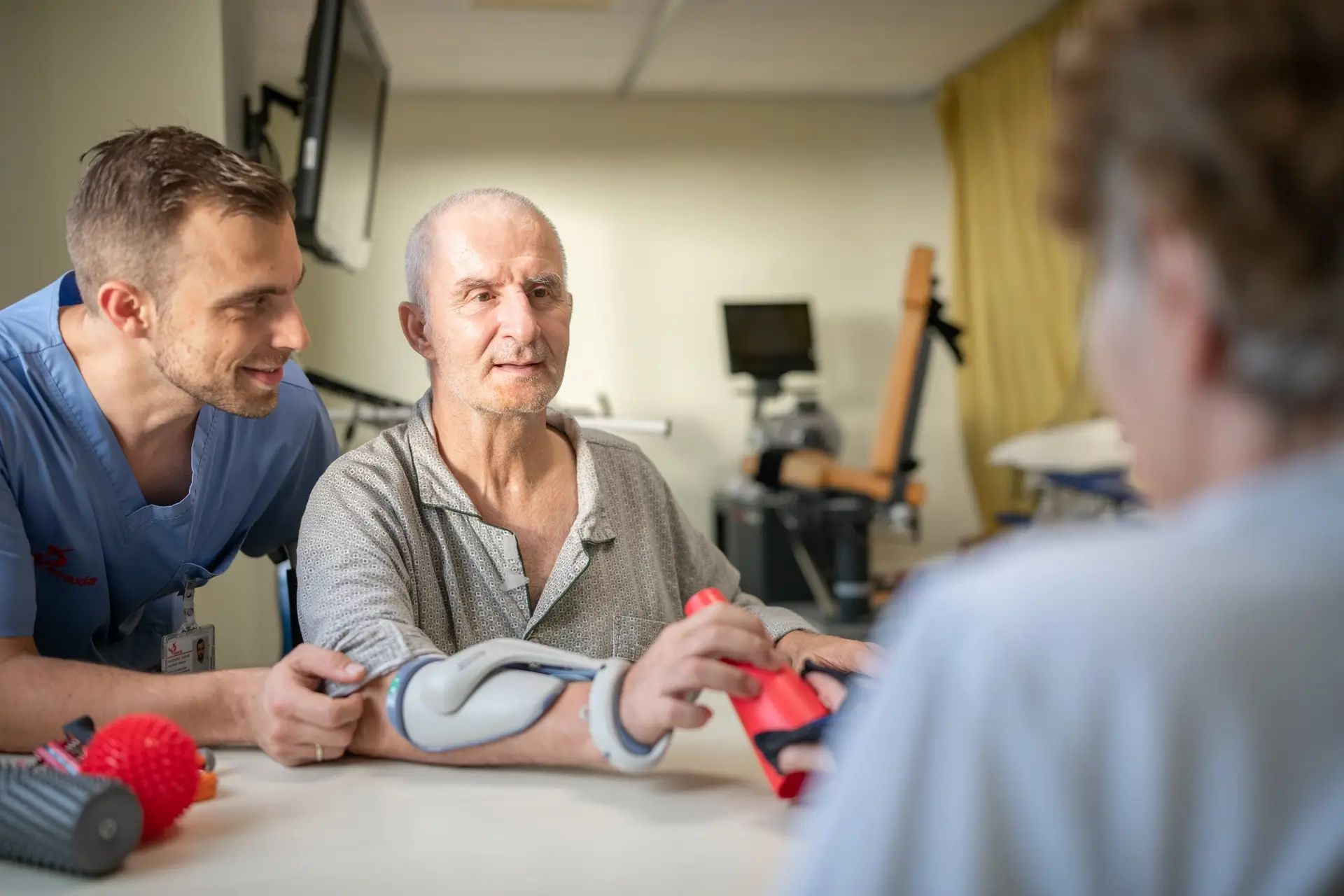
Physiotherapy, including treadmill training with heart-rate monitoring, and occupational therapy for washing, dressing, and getting in and out of bed, a chair or a car.
Preventing the next setback
Our team follows protocols for delirium, bone health and falls, with balance practice in daily physiotherapy and occupational therapy to plan a safer home.
After an accident or complex surgery
One physician owns your case and one plan brings the team together, with pain management, on-site X-ray and our orthopaedic surgeon for reviews.
Water, once the wound has healed
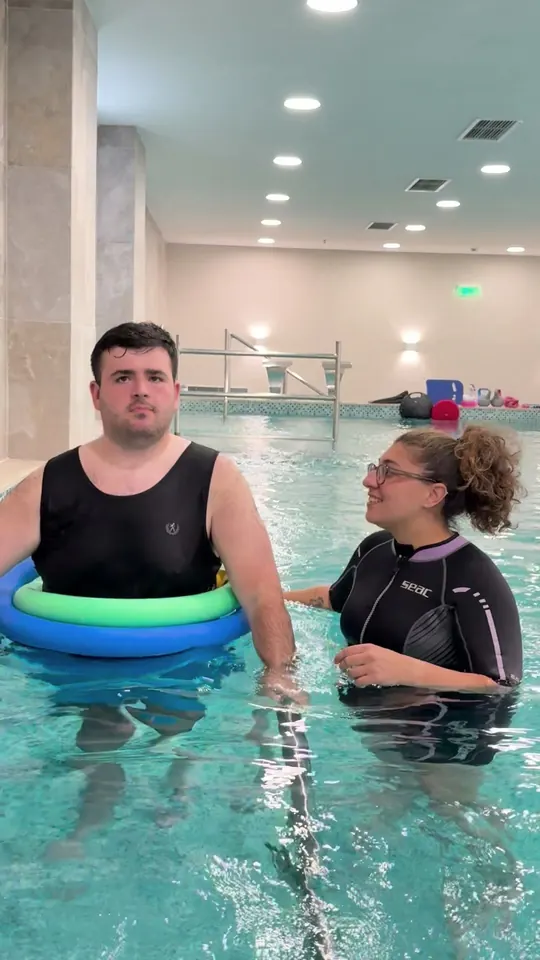
Your physician checks that hydrotherapy is safe for you first, and pool work starts only once your wound has healed. Sessions are one-to-one, with ramps and hoists.
Your orthopaedic rehabilitation programme
Every programme is planned around your goals by a Physical Medicine and Rehabilitation physician, who works from your surgeon's instructions and reviews your progress with you every week. Most people work with several of these services each day:

Physiotherapy and robotics
Gait, balance, strength, transfers and stairs, every day.
See the service
Occupational therapy
Washing, dressing, transfers, equipment and planning for a safer home.
See the service
Hydrotherapy
One-to-one sessions in our three pools, once your wound has healed.
See the service
Psychology and neuropsychology
Mood, confidence and adjustment after a fall or an accident.
See the service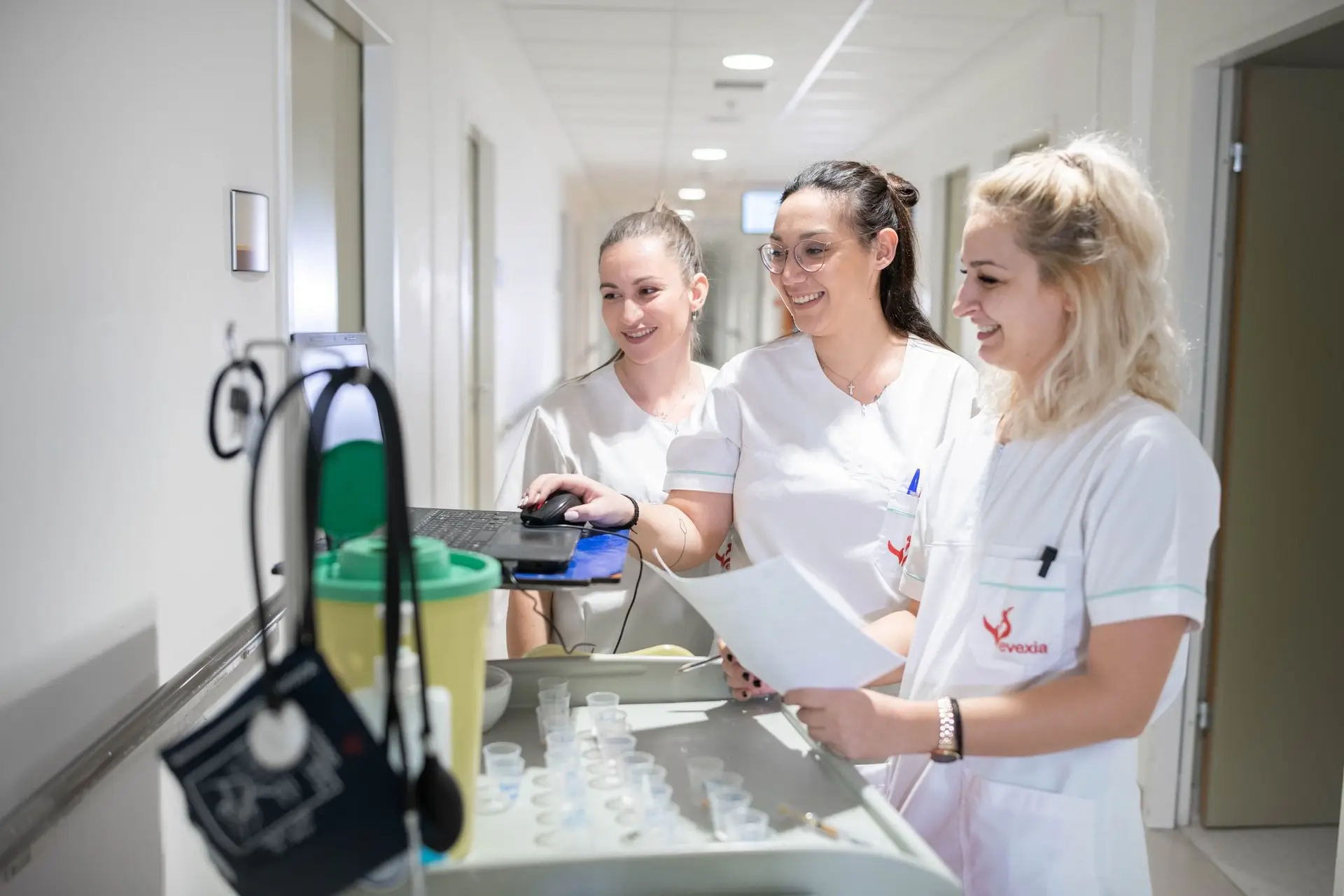
Medical and nursing care
Pain management, 24-hour cover, and on-site X-ray, ultrasound and laboratory.
A typical day
The day is planned around your energy and your pain, and the timetable changes as you get stronger.
Morning
Physiotherapy for gait, strength and balance, then occupational therapy.
Midday
Lunch served at your bedside, then rest.
Afternoon
More physiotherapy, then hydrotherapy or psychology, depending on your plan.
Evening
Time with your family in the gardens, the lounges or your room.
What to expect during your stay
In the first days, the team assesses you and agrees your goals with you, and with your family if you wish. Realistic goals might be:
Recovery after a fracture or major surgery is different for everyone, and we cannot promise a particular result. It carries on for months after you go home, and not everyone gets back to how they were before. What we can promise is that we track your progress, review your goals every week and tell you honestly what we see. Before you leave, occupational therapy prepares a plan for home, and we send a full report to your doctor in Ireland.
From the first call to coming home
Most people have never arranged care abroad. This is the whole route, so you know what happens next and who does it.
Before you travel
- 1
Talk to us
Call, send a WhatsApp message or use the form. We explain how the Cross-Border Directive works and what we need from you.
- 2
Send your records
A recent medical summary, your medication list and any recent scans or X-rays. Our physician reviews them, checks that you are fit to fly, and tells you honestly whether a stay is likely to help.
- 3
Referral and estimate
Ask your GP or public hospital consultant for a dated referral letter; we tell you exactly what it should say. We send a written estimate in English before you commit.
Your stay
- 4
Choose your date
There is no waiting list. You choose the date, and we meet you at Thessaloniki airport.
- 5
Consultation and admission
The outpatient consultation with our physician the day before admission, then your programme starts.
- 6
Your stay
At least 3 hours of therapy a day, with your goals reviewed every week.
Back home
- 7
Home and your claim
You go home with a plan for home, a full report for your doctor and every document the HSE claim needs.
How the HSE reimburses orthopaedic rehabilitation
Inpatient orthopaedic rehabilitation at Evexia Plus is reimbursable by the HSE under the EU Cross-Border Healthcare Directive. You don't need a medical card or private insurance.
You pay the hospital
You pay Evexia Plus directly for your stay.
You claim from the HSE
With the documents we give you at discharge.
The HSE repays you
What you paid, up to what the same care would cost in the Irish public system.
What the HSE needs
- 01
A referral letter from your GP, or from a hospital consultant who sees you as a public patient.
- 02Our recommendation
An outpatient consultation, in person, dated after the referral. Have it with our physician in Greece the day before admission: one trip, and no wait for a clinic appointment in Ireland.
- 03Optional
Prior Notification gives an indicative figure, not a guarantee, and with current delays the HSE's reply can take months. We usually advise going ahead without it, because the HSE assesses every claim after treatment either way.
Reimbursable
- The inpatient programme (therapy, nursing care and your stay in the hospital)
- Medicines and tests during the stay
- The outpatient consultation at the HSE's rate
Not reimbursable
- Flights and other travel
- Family travel and accommodation outside the hospital
- Medicines you take home
Before you commit, our team sends a written estimate in English. At discharge, we give you every document the claim needs.


Your family can stay with you
Rehabilitation goes better with the people you love close by. One family member can stay with you free of charge, in your room or in nearby accommodation we arrange.
More relatives can stay in seaside hotels in Kallikratia, five minutes away, and a free shuttle bus runs to Thessaloniki. We collect you and your family from Thessaloniki airport, and take you back, at no cost.
Every member of our staff communicates in English. Meals are cooked in our own kitchen and planned by a dietician.
See Evexia Plus before you travel.
Photos and reels from the therapy halls and the pools. Follow us for a closer look.
@evexia.ie on Facebook (opens in a new tab)@evexia.plus on Instagram (opens in a new tab)@evexia.ie on TikTok (opens in a new tab)
Questions about orthopaedic rehabilitation
Is inpatient rehab better than recovering at home after a hip or knee replacement?
Not for everyone. After a straightforward hip or knee replacement, most people do as well at home with exercises and local physiotherapy. Inpatient knee replacement rehabilitation, or rehabilitation after hip replacement, makes more sense when recovery is not straightforward: a complication, a repeat operation, other health conditions, or not yet being safe at home. A stay is reimbursable by the HSE either way, and our physician will tell you honestly whether it is likely to help.
Is this the same as convalescent care after surgery?
No. Convalescent care, or step down care, usually means rest and nursing support while you get stronger. Rehabilitation is active treatment: at least 3 hours of therapy a day towards goals you set with the team, such as walking safely, managing stairs and getting home. A rehabilitation physician leads it, with doctors and nurses on site day and night.
How soon can rehab after a broken hip start?
As soon as you are medically stable, your surgical team has said how much weight you can put through the leg, and our physician has reviewed your records. There is no waiting list, so you then choose your admission date. Getting up and moving early matters after a broken hip, so it is worth starting the conversation while you are still in hospital. If you are living with dementia, tell us when you first get in touch: our physician reviews each case individually.
Is it safe to fly after a broken hip or joint surgery?
It depends on the operation, your recovery and your risk of blood clots, so it is checked for each person. Our physician reviews your records and checks that you are fit to fly before a date is set, and clot prevention for the journey is planned with you. We meet you at Thessaloniki airport at no cost.
Do you offer polytrauma rehabilitation after an accident?
Yes. After an accident with several injuries, one rehabilitation physician leads one plan, bringing together physiotherapy, occupational therapy, pain management, psychology and, once wounds have healed, hydrotherapy. Many people improve a great deal, but not everyone gets back to how they were before.
Do I need inpatient rehabilitation after spinal surgery?
Often not. After straightforward spinal surgery, such as a disc operation, most people recover with exercise and outpatient physiotherapy. An inpatient stay can help when recovery is complicated: a larger fusion, new weakness in the legs, other health conditions, or not yet being safe at home. Your programme is planned around the specific operation and your surgeon's instructions.
How long does recovery take after a broken hip or major surgery?
It is different for everyone. After a broken hip, most recovery happens in the first six months, and walking and balance can keep improving after that. The length of your stay is set by the consultant at your outpatient consultation and reviewed every week with you. The HSE does not limit the number of weeks it reimburses; it caps the rate.
Can I arrange orthopaedic rehabilitation from Cork, Dublin or Galway?
Yes. After a hip fracture, a joint replacement or an accident, you can arrange your stay from Cork, Dublin, Galway, Limerick, Waterford or anywhere else in Ireland. Your own GP or public hospital consultant writes the referral, we review your surgeon's reports by email, and you choose the admission date. The outpatient consultation can take place with our physician in Greece the day before admission.
Does the HSE pay for orthopaedic rehabilitation abroad?
Yes, under the EU Cross-Border Healthcare Directive, including after a hip or knee replacement. You pay the hospital directly, then the HSE repays what you paid, up to what the same care would cost in the Irish public system. You need a referral from your GP or a public hospital consultant and an outpatient consultation. Flights and family accommodation outside the hospital are not reimbursable.
Where does the outpatient consultation take place?
You can have it in Ireland with a public hospital consultant, or with our physician in Greece on the day before admission. We recommend the second: you make one trip and avoid waiting for a clinic appointment. Either way, it must take place after the date on your referral letter.
Can my family stay with me?
Yes. One family member stays free of charge, in your room or nearby accommodation we arrange. More relatives can stay in seaside hotels five minutes away, family can visit every day, and airport transfers are free for you and your family. Our psychology team supports family members too.