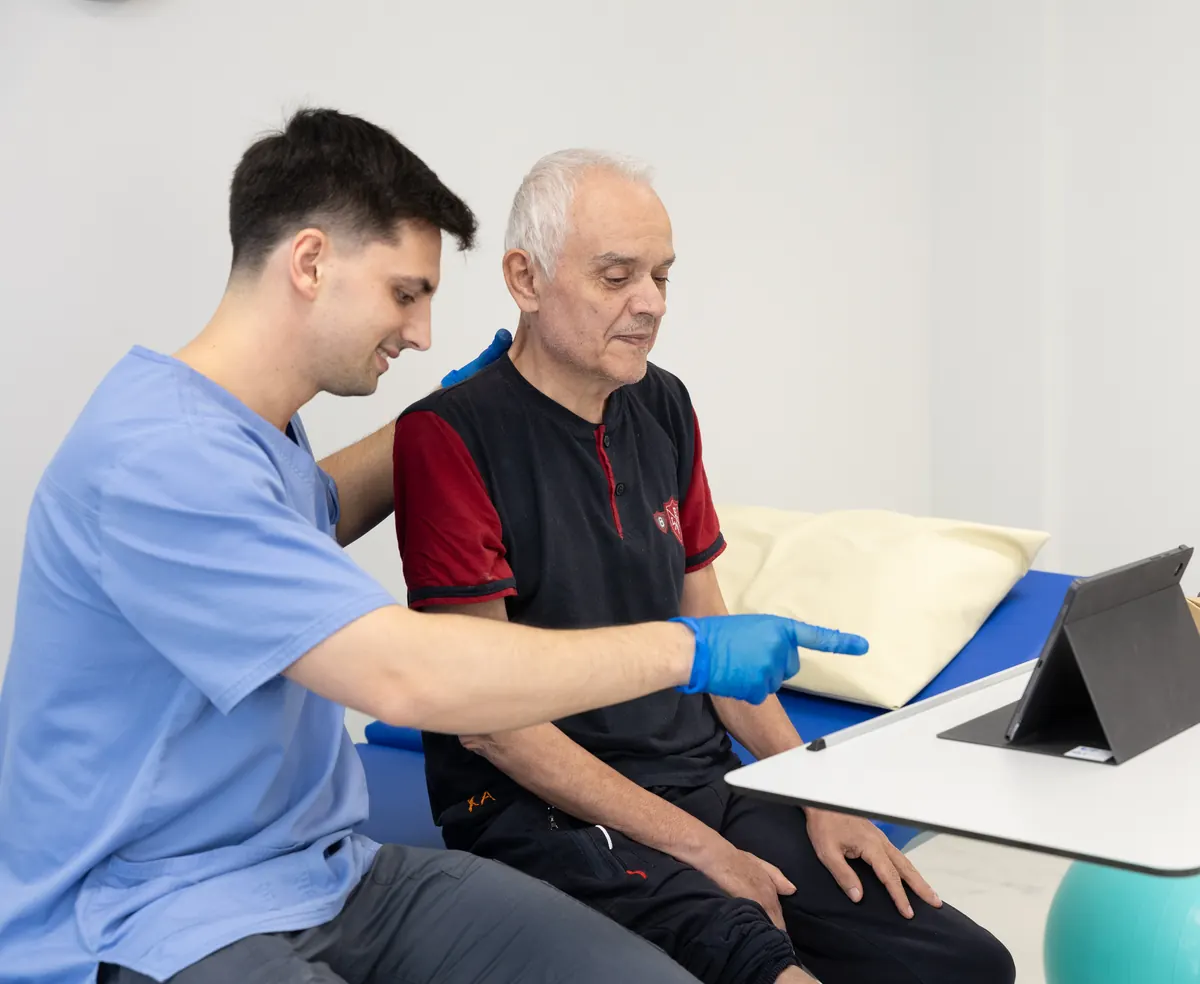
Therapist pointing to an exercise on a tablet for an older man during a speech and language therapy session

Speech and swallowing therapy in fluent English

Speech and swallowing therapy, with FEES camera swallow tests on site, exercises for safer swallowing, aphasia and dysarthria therapy, LSVT LOUD for Parkinson's and communication aids.

No referral or paperwork needed for the first call.

Speech and swallowing therapy at Evexia Plus

At Evexia Plus, speech and language therapy covers two things: how you communicate, and how you eat, drink and swallow safely. Our speech and language therapists work in fluent English with people after a stroke, a brain injury or a spinal cord injury, and with conditions such as Parkinson's, multiple sclerosis and motor neurone disease. If swallowing is a concern, an ENT doctor and a therapist can check it on site with a camera test. A physician in Physical Medicine and Rehabilitation sets your goals with you. Speech and swallowing therapy is part of at least 3 hours of therapy a day, and the cost is reimbursable by the HSE.
The speech and swallowing therapy methods we use

Your speech and language therapist chooses from these to suit what you need, and changes the plan as you progress.

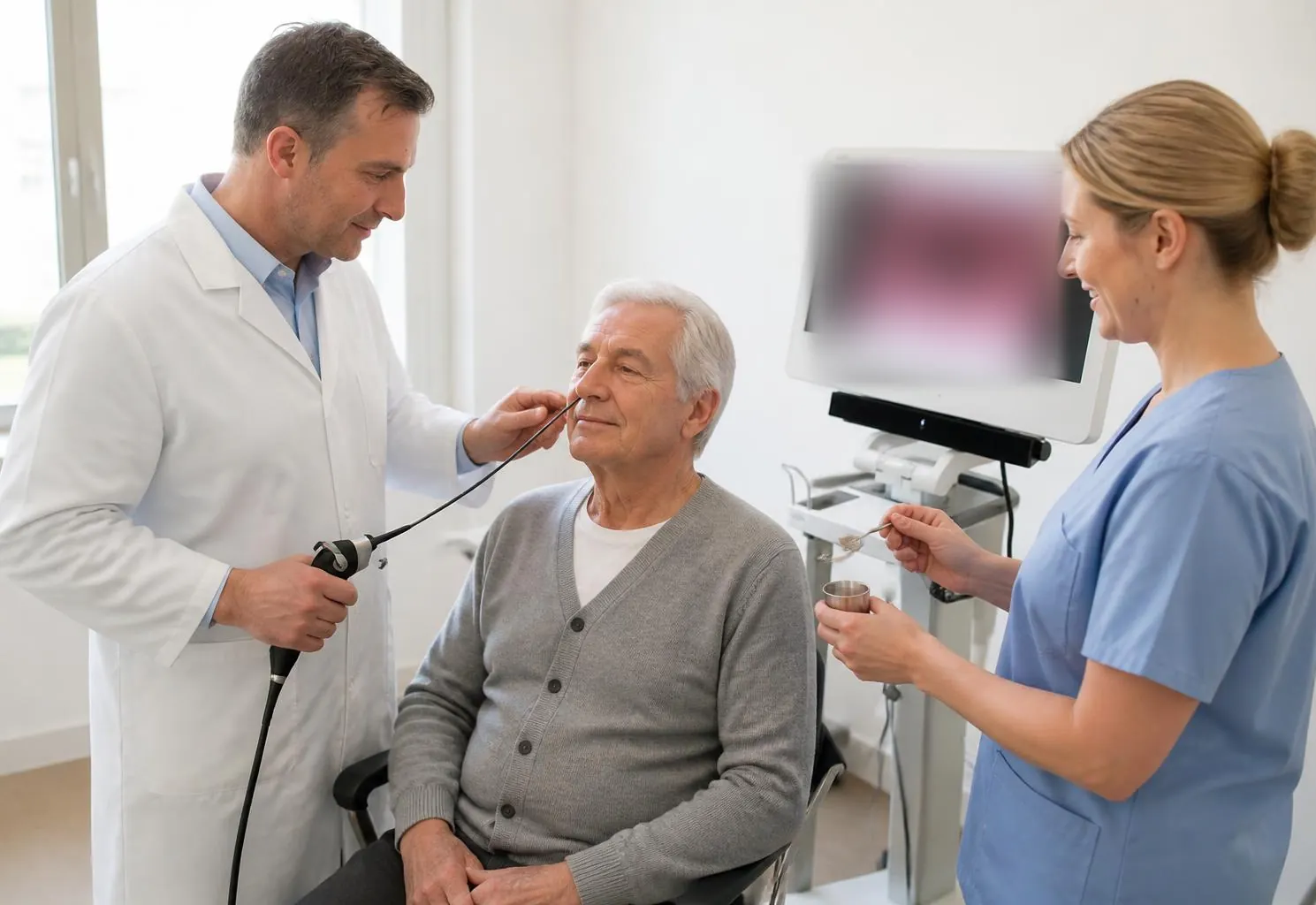
ENT doctor carrying out a FEES camera swallow test while a speech and language therapist holds a cup and spoon

FEES camera swallow test

FEES (fibreoptic endoscopic evaluation of swallowing) is a camera swallow test, done on site by an ENT doctor with your speech and language therapist. A thin, flexible camera passes through your nose, so they can watch as you swallow small amounts of food and drink.

Older woman sipping water with her chin tucked while her speech and language therapist shows the position

Swallowing therapy

Exercises for the muscles you swallow with, safer ways to swallow, such as tucking your chin or changing your posture, and practice with real food and drink, all based on what your assessment shows.

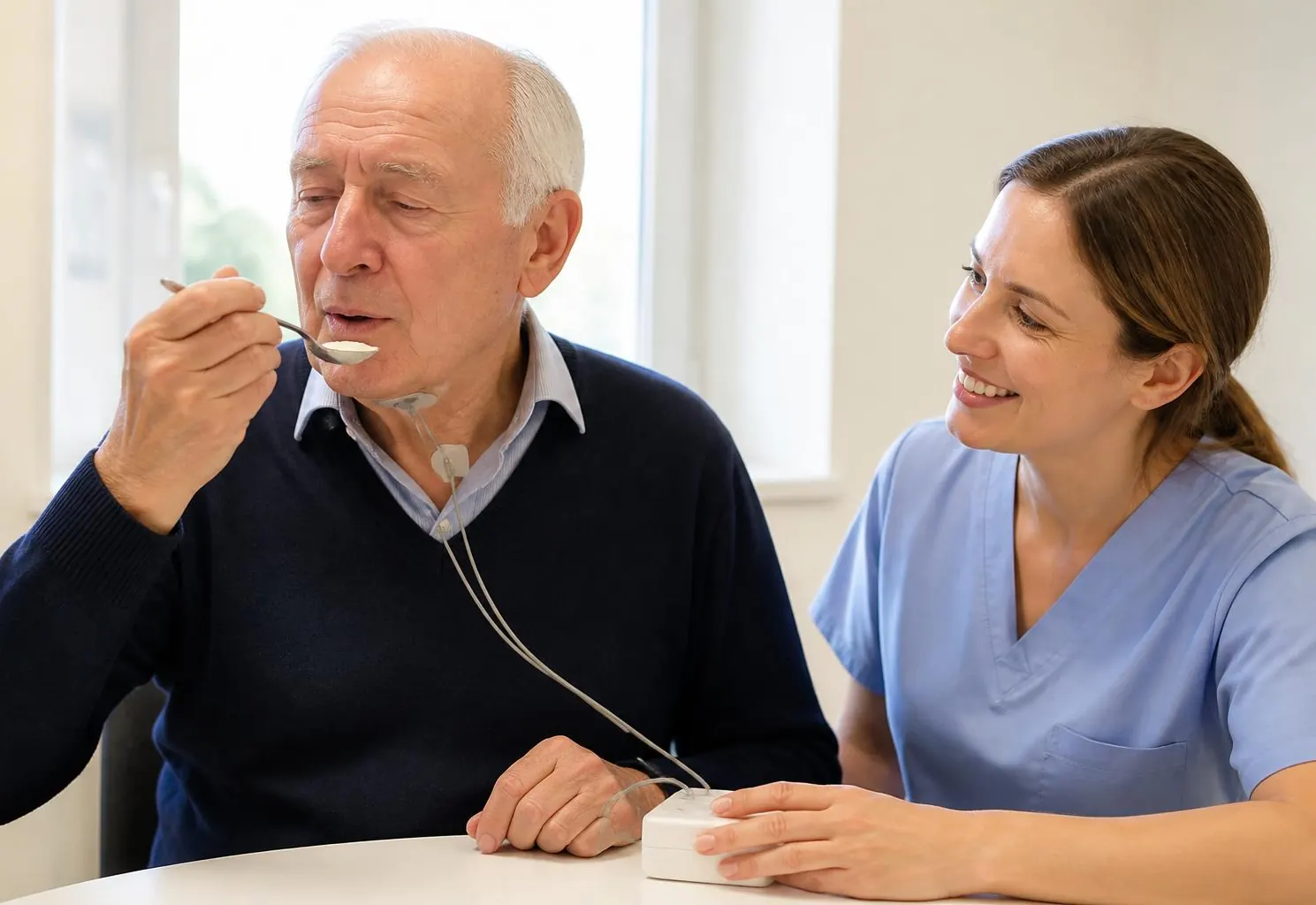
Older man with small electrode pads on the front of his neck swallowing a spoonful of yoghurt, his therapist beside him

Electrical stimulation for swallowing

Small pads on the front of your neck give gentle pulses to the swallowing muscles while you practise swallowing with your therapist. It is used for some patients, mainly after a stroke, if your physician and therapist agree it suits you.

Man writing a word while his speech and language therapist points to a picture during aphasia therapy

Aphasia therapy

For difficulty finding words, understanding what people say, reading or writing after a stroke or brain injury. Your therapist uses word-finding and conversation practice, and reading and writing work, always in English.

Therapist showing a boy how to open his mouth wide during a mouth exercise

Dysarthria therapy

For slurred or unclear speech, when the muscles used for speaking are weak or poorly co-ordinated. Exercises for breathing, voice, lips and tongue, and strategies such as slowing down and stressing key sounds.

Man in a wheelchair spelling a word on an alphabet board with his daughter and his therapist

Communication aids (AAC)

When speech is limited, your therapist finds other ways to get your message across, such as an alphabet or picture board, and teaches you and your family to use them. AAC stands for augmentative and alternative communication.

Smiling therapist holding hands with a boy who has a tracheostomy, in his hospital bed

Speaking valves and swallowing with a tracheostomy

If you have a tracheostomy, your speech and language therapist works with the medical team on using a speaking valve, so you can use your voice, and on swallowing safely with the tube in place.

More speech and voice methods

Speech and language therapy software on tablets

Specialised therapy programmes on a tablet, with exercises for naming, word-finding, reading, writing and speech. Your therapist chooses the exercises and sets the level for each session.

LSVT LOUD for Parkinson's

An intensive voice programme for Parkinson's that trains you to speak louder with real effort, then carries the louder voice into everyday conversation. Our speech and language therapists are certified to deliver LSVT LOUD.

Speech and swallowing therapy is part of the inpatient programme, which is reimbursable by the HSE under the EU Cross-Border Healthcare Directive.

You pay the hospital, then claim the cost back, and we give you every document the claim needs. The route is the same in every county, whether you live in Cork, Waterford, Galway or Mayo.

How it works, step by step

Questions about speech and swallowing therapy

Something else on your mind? Call us on 01 263 3051.

What is a FEES swallow test?

FEES (fibreoptic endoscopic evaluation of swallowing) is a camera swallow test. You sit upright, a thin, flexible camera is passed through your nose to the back of your throat, and you swallow small amounts of food and drink while the ENT doctor and your speech and language therapist watch on a screen. The results show which foods, drinks and ways of swallowing are safest for you.

What does a speech and language therapist do for adults?

A speech and language therapist assesses and treats problems with talking, understanding, reading, writing, voice and swallowing. In rehabilitation, that can mean word-finding practice after a stroke, exercises for slurred speech, a programme for a quiet voice with Parkinson's, or working out how you can eat and drink safely. At Evexia Plus, our speech and language therapists work in fluent English.

How is a swallowing problem (dysphagia) treated?

First your therapist finds out what is happening, often with a FEES camera test. Treatment then mixes exercises for the swallowing muscles, safer ways to swallow, and food and drink at the right texture: your therapist recommends the texture, and the dietician plans your meals to match. For some patients, mainly after a stroke, electrical stimulation is added during swallowing practice.

What is the difference between aphasia and dysarthria?

Aphasia affects language: finding words, understanding what people say, reading or writing. Dysarthria affects the muscles used for speaking, so speech sounds slurred or unclear even though you know exactly what you want to say. A person can have both, for example after a stroke. Your speech and language therapist assesses which you have and treats each one differently.

Do you offer LSVT LOUD?

Yes. Our speech and language therapists are certified to deliver LSVT LOUD, an intensive voice programme for Parkinson's. It trains you to speak louder with real effort, then carries that voice into everyday conversation. Your physician and therapist decide with you whether it suits you, and it runs within your therapy programme.

Is speech and language therapy in English?

Yes. Speech and language therapy at Evexia Plus is delivered in fluent English, and every member of our staff communicates in English. That matters most in aphasia therapy, where you practise the words and conversations you use at home.

Is speech and swallowing therapy reimbursable by the HSE?

Yes. Speech and swallowing therapy is part of the inpatient rehabilitation programme, which is reimbursable by the HSE under the EU Cross-Border Healthcare Directive. You don't need a medical card or private insurance. We send a written estimate in English before you commit, and give you every document the claim needs.

Talk to us about speech and swallowing

Tell us a little about you and what you'd like to work on. We reply within one working day, Monday to Friday.
Thank you. Your enquiry has been received. We will reply within one working day, Monday to Friday. If you need to speak with us sooner, please call 01 263 3051.
Your enquiry could not be submitted. Please try again, or contact us directly on 01 263 3051 or at info@evexia.ie.